The park is closed
from 05:00 to 09:00.
The museum's published August hours say 7:30 on 6 August. It does not open until about 09:45. The park itself is shut to the public from 05:00 to 09:00, there is a bag check and a metal detector, and the day ends with a thousand paper lanterns on the Motoyasu River. Here is the whole thing, in order.
The Peace Memorial Ceremony runs 08:00–08:50 in front of the Cenotaph, with the silent prayer and the Peace Bell at 08:15. The park is closed to the public 05:00–09:00 — but if you are not attending, a worship-only corridor to the Cenotaph runs 05:00–07:00 through a dedicated entrance, with no bag check and no metal detector. The museum does not open until about 09:45, then runs to 21:00, which lines up exactly with the lantern floating from 18:00 to 21:00.
The published hours are not the hours
The trapThis is the single most damaging thing on the internet about Hiroshima in August: the museum's own August timetable says 7:30–21:00 on 5 and 6 August, and on the 6th it does not open until roughly 09:45 — after the ceremony. If the Prime Minister tours the building, entry can be blocked past 09:00 as well.
Combine that with a park that is closed to the public from 05:00 to 09:00 and you get the classic failure: a visitor drifts up at 07:30 on the most significant morning of the Hiroshima year, expecting a normal early start, and loses the entire morning standing outside a cordon.
On 6 August the Peace Memorial Park is a ceremony, not a sightseeing destination — 55,000 people attended the 80th anniversary. Hotels sell out months ahead and Nozomi seats for 5–7 August go within days of release. If your dates land on it, decide deliberately: come for the ceremony and the evening lanterns and accept that everything else is full, or move your Hiroshima day.
If your dates are movable, 1–4 or 17–20 August are the clean windows — everything on normal hours and no reservation regime. From 8 to 16 August 2026 the museum is online-reservation-only all day at 1,000 people an hour, with no walk-ups accepted at all.
6 August 2026, hour by hour
The programmeThe park closes — and the worship corridor opens
The whole of Peace Memorial Park is shut to general sightseeing for the ceremony set-up, and road closures run 05:00–22:00 around it. But this is the fact almost nobody publishes: a worship-only corridor to the Memorial Cenotaph operates from 05:00 to 07:00, through a dedicated entrance, with no bag check and no metal detector. If you are not attending the ceremony but want to pay respects on the day, that two-hour window is your answer.
Attendees may enter
Entry opens for the ceremony. Total seating is around 7,000 — roughly 1,600 for hibakusha and bereaved families and about 1,200 general seats, allocated first-come, with entry restricted once they are full. No application procedure is published — arrive at 06:00 and verify the current arrangements with the city rather than relying on this page. A record 127 countries and regions are expected; since 2025 Hiroshima notifies all 196 countries and the EU rather than issuing invitations, a change made after controversy over the invitation list.
Bag check, then metal detector
Bags are checked at the park entrance and there is a metal detector at the entrance to the seating area. Two hours of queueing in an average August daily maximum of 32.8°C and 69% humidity — bring water, a hat and a fan, and do not wear anything you cannot stand up in for three hours.
The Peace Memorial Ceremony begins
In front of the Memorial Cenotaph. The register of the dead is dedicated and wreaths are laid.
Silent prayer and the Peace Bell
The exact minute of the detonation in 1945. The bell sounds and the city stops. This is the moment everything else on the day is arranged around.
The Peace Declaration
Read by the Mayor of Hiroshima. It is a political document as much as a memorial one, and it is worth reading afterwards even if you did not follow the Japanese.
Commitment to Peace
Delivered by two children representing the city's elementary schools.
The ceremony ends
A simultaneous relay runs at the Hiroshima International Conference Center inside the park, with capacity for about 2,200. It is air-conditioned, seated and far easier than the lawn — and it is the realistic fallback once the ~1,200 general seats have gone, not a consolation.
The park reopens · Memorial Hall accessible
The National Peace Memorial Hall's published hours run to 20:00 on this day, but the park cordon means 09:00 is the practical opening. It is free, underground and air-conditioned, which matters by mid-morning.
The museum finally opens
Roughly 09:45, and later if the Prime Minister tours it. Then straight through to 21:00. If you can get the evening reserved slot, take it.
Toro Nagashi — the opening rite
On the Motoyasu River, on the bank opposite the Dome. Reception tents run 07:00–20:30 for lantern purchase.
The lanterns float
¥1,000 per lantern, cash only. Watching costs nothing. Foreigners can and do participate — either hand-float your own or have staff launch it for you. Lanterns can sell out. Held in light rain.
The museum closes
The scheduling gift of the whole day: the museum runs to 21:00 and the lanterns float 18:00–21:00 a few metres away. Book the evening museum slot and you can do both.
6 August against a normal day
What is openEverything that changes on the 6th, in one place.
| Place | On 6 August 2026 | Normal August day | The catch |
|---|---|---|---|
| Peace Memorial Park | Closed 05:00–09:00 | Open 24 hours | The single most-missed fact about this day — but see the 05:00–07:00 worship corridor below. |
| Worship-only route to the Cenotaph | 05:00–07:00, dedicated entrance | Not applicable | No bag check, no metal detector. How a non-attending visitor pays respects on the 6th. |
| Peace Memorial Museum | ~09:45–21:00 | 7:30–20:00 | Published hours say 7:30 on the 6th. They are not what happens — and if the Prime Minister tours the building, entry can be blocked past 09:00 as well. |
| National Peace Memorial Hall | To 20:00, in practice from 09:00 | 8:30–19:00 in August | Free, underground, air-conditioned. The best mid-morning option on this day. |
| Roads around the park | Closed 05:00–22:00 | Normal | Buses detour 06:30–09:30. Do not plan on driving — take the tram. |
| A-Bomb Dome | Visible from outside the cordon before 09:00 | 24 hours, free | For a dawn Dome, go on the 5th instead. |
| Crane booths | 06:00–20:00 | 08:45–17:00 | The only day of the year with extended crane hours. |
| Toro Nagashi lanterns | Rite 17:30 · floating 18:00–21:00 · tents 07:00–20:30 | Does not run | ¥1,000 each, cash only, and they can sell out. |
| Hotels and Nozomi seats | Sold out months ahead | Widely available | 5–7 August seat releases go within days. See where to stay. |
80th-anniversary attendance was about 55,000 people. Dollar prices convert at ¥157.7 = $1, the rate on 4 August 2026. Treat every $ figure as a snapshot and the ¥ figure as the real price.
The bag check, and what you cannot bring
SecurityTwo checkpoints: bags at the park entrance, a metal detector at the seating entrance. The banned list is specific and it is enforced.
Blades, flammables, megaphones and loudspeakers, musical instruments, placards and banners, drones, helmets and headbands. Several of those are aimed squarely at organised protest rather than at tourists.
Every bag, every entrance. Travelling with luggage on this day is a bad idea — leave it at the station or the hotel and carry the minimum.
A second, tighter check for anyone taking a seat rather than standing at the perimeter.
If you are not attending the ceremony, the dedicated worship-only route to the Cenotaph runs 05:00–07:00 with no bag check and no metal detector. It is the quiet answer to "the park is closed until 09:00, so what do I do?"
Total seating is around 7,000, of which roughly 1,200 is general, first-come, and entry is restricted once full. There is no published application procedure — verify the current arrangement with the city rather than treating any blog, this one included, as authoritative. The ~2,200-capacity relay at the International Conference Center is the fallback.
Roads around the park are closed 05:00–22:00 and buses detour 06:30–09:30. Take the Hiroden — line 2 or 6 to Genbaku Dome-mae, flat ¥240.
August normals for Hiroshima: mean 28.5°C, average daily maximum 32.8°C, minimum 25.1°C, 131.4mm of rain across the month and 69% humidity. Two hours seated on a lawn from 06:00 is a real physical undertaking.
At the ceremony and at the lantern floating in the evening. Do not bring one to the river.
It is not a hushed day
Reality checkEvery guide describes 6 August as solemn silence. Inside the ceremony ground it is. On the streets around the park it is not: protest is real, legal and visible, right-wing sound trucks are a known and recurring feature of the morning, and the noise carries. Expect amplified argument within a few hundred metres of the silent prayer.
That is not a warning to stay away. It is the actual texture of the day, and being surprised by it in the moment is worse than knowing in advance. Hiroshima's 6 August is a political event as well as a memorial one — the Peace Declaration read at 08:16 is itself a policy statement — and the city does not pretend otherwise.
If you want the ceremony without the crush and the heat, the simultaneous relay at the Hiroshima International Conference Center inside the park is seated, air-conditioned and materially easier. The same building hosts the 5–6 August special sessions with actual survivor testimony in English, free and unbooked.
Toro Nagashi, and how to actually do it
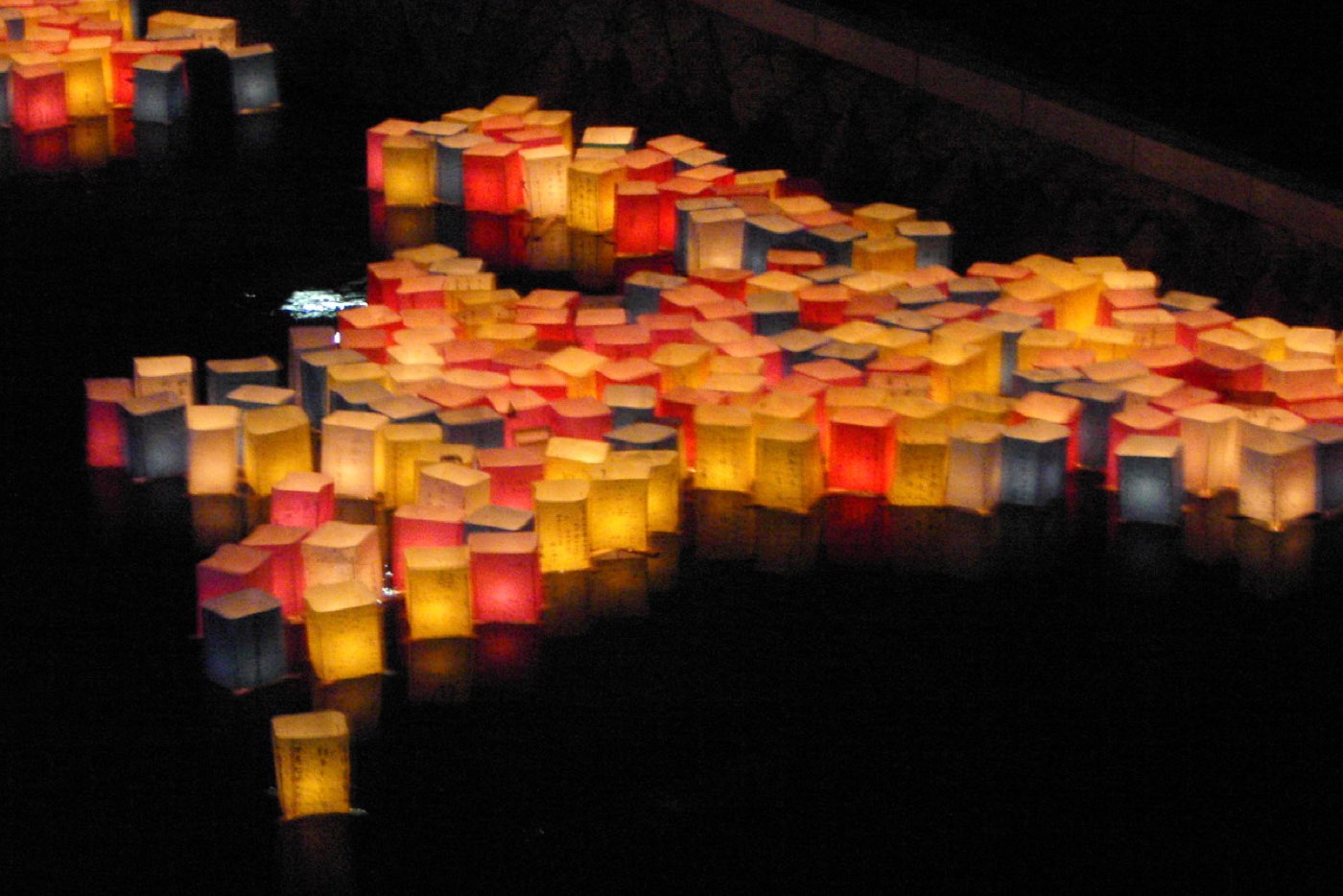
The eveningThe lantern floating happens on the Motoyasu River, on the bank opposite the Dome. The opening rite is at 17:30, lanterns go on the water from 18:00 to 21:00, and the reception tents where you buy one are open from 07:00 to 20:30.
A lantern costs ¥1,000 — about $6.30 — and it is cash only. Watching costs nothing at all, and the riverbank fills up from about 18:30. Foreigners can and do participate: you either hand-float your own lantern from the bank or hand it to staff to launch. You write on it first. Lanterns can sell out, so buy in the morning if you know you want one, not at 19:00.
Rules on the water: paper lanterns only, nobody enters the river, and no drones. The event goes ahead in light rain. And the scheduling gift is real — the museum runs to 21:00 on this day and the lanterns float 18:00–21:00 a few metres away, so an evening museum slot and the river are not a choice between two things.
The practical bit
Plan your visit6 August — the questions
FAQPage schema pairedWhat time is the Hiroshima peace ceremony?
08:00 to 08:50, in front of the Memorial Cenotaph. The silent prayer and Peace Bell fall at 08:15, the exact minute of the 1945 detonation; the Mayor's Peace Declaration follows at 08:16 and the children's Commitment to Peace at 08:24. Attendees enter from 06:00.
Can anyone attend the 6 August ceremony?
In practice yes, subject to space. Total seating is around 7,000: about 1,600 reserved for hibakusha and bereaved families and roughly 1,200 general, allocated first-come from 06:00 and restricted once full. If those go, the live relay at the Hiroshima International Conference Center inside the park seats about 2,200 and is air-conditioned. No application procedure is published, so verify the current arrangements with the city — that is the one part of the day we cannot confirm has stayed the same.
Is the Peace Memorial Park open on 6 August, and can you visit the Cenotaph?
The park is closed to general sightseeing from 05:00 to 09:00, with roads around it shut 05:00–22:00 and buses detouring 06:30–09:30 — which is the fact that breaks itineraries. But a worship-only corridor to the Memorial Cenotaph operates 05:00–07:00 through a dedicated entrance, with no bag check and no metal detector. That two-hour window, about 15 minutes of walking, is how a visitor who is not attending the ceremony pays respects on the day.
What time does the museum open on 6 August?
About 09:45, despite published August hours that say 7:30–21:00 on the 5th and 6th — and potentially later still if the Prime Minister tours the building, which can block entry past 09:00. It then stays open until 21:00. The museum's own hours table contradicts what actually happens on this one day, which is why so many itineraries fail here.
What can't you bring to the ceremony?
Blades, flammables, megaphones and loudspeakers, musical instruments, placards and banners, drones, helmets and headbands. Bags are checked at the park entrance and there is a metal detector at the seating entrance, so allow extra time and travel light.
Is 6 August a silent, solemn day in Hiroshima?
Inside the ceremony ground, yes. Outside it, no. Protest is legal and visible on the surrounding streets and right-wing sound trucks are a recurring feature of the morning — amplified argument carries to within a few hundred metres of the 08:15 silence. It is a political day as much as a memorial one, and being surprised by that in the moment is worse than knowing.
How does the Toro Nagashi lantern floating work?
On the Motoyasu River opposite the Dome: opening rite at 17:30, lanterns on the water 18:00–21:00, reception tents 07:00–20:30. A lantern is ¥1,000 (about $6.30) and payment is cash only. Watching is free. Foreigners can participate — float it yourself from the bank or hand it to staff. Lanterns can sell out, so buy early. Paper only, nobody enters the river, no drones, and it runs in light rain.
Should I plan my Hiroshima day for 6 August?
Only deliberately. Hotels sell out months ahead and 5–7 August Nozomi seats go within days of release; the 80th anniversary drew about 55,000 people. If you come, come for the ceremony and the lanterns and accept the rest of the day is compressed. If you can move, 1–4 or 17–20 August are clean — between 8 and 16 August the museum is reservation-only all day at 1,000 people an hour. Nagasaki's ceremony is on 9 August, about 2.5 hours away by shinkansen, and they are two separate events.
Booking and getting there
PracticalNothing about the ceremony is bookable and the lanterns are bought in cash on the day. What does need booking, badly and early, is a bed.