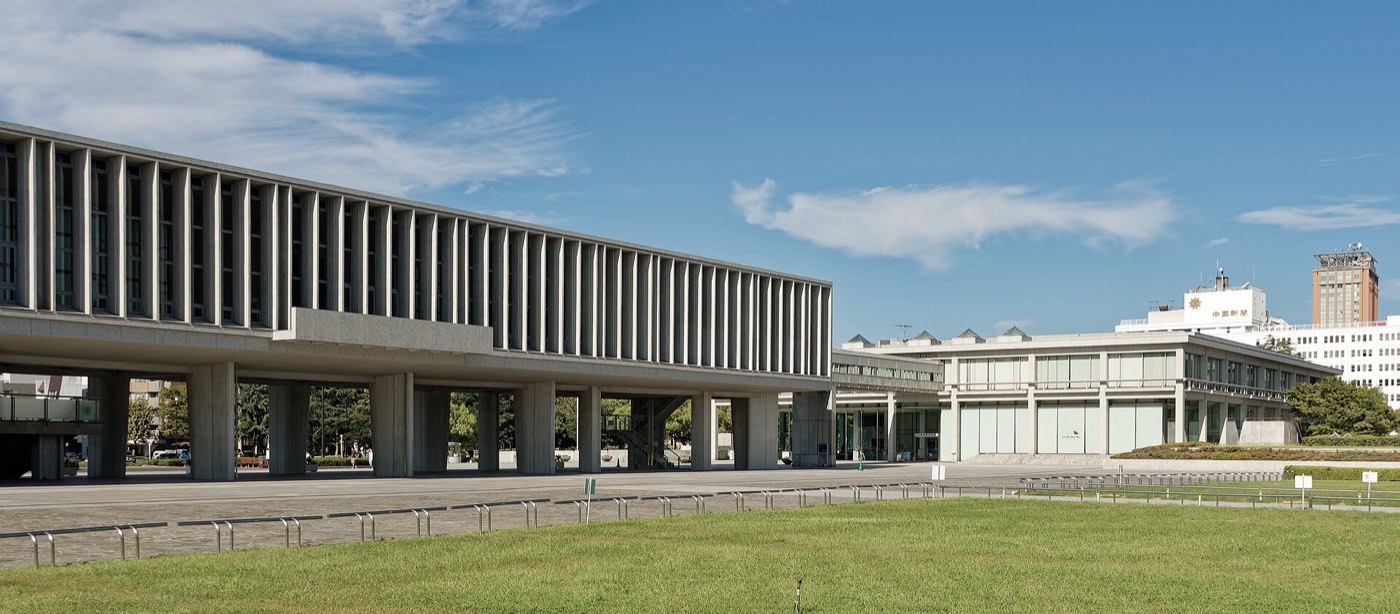
The museum opens at 7:30.
Almost nobody uses it.
Admission is ¥200. The seasonal hours change four times a year, the extended morning and evening slots are reservation-only all year round, and from 8 to 16 August 2026 the whole day is. This is the practical page — hours, prices, booking, and the hour by hour crowd picture.
¥200 for an adult, ¥100 for high-school students and over-65s with ID, free for junior-high and under. Doors open at 7:30 and last entry is 30 minutes before closing. Allow two hours minimum and three if you read properly — and if your dates fall between 8 and 16 August 2026, you cannot walk up at all.
What you need to get right
The short versionThree things decide whether this visit works: the hour you arrive, the time you allow, and whether your dates fall inside a reservation window. Everything else is ¥200 and a cloakroom.
From 8 to 16 August 2026 the Peace Memorial Museum takes no walk-ups at all: online reservation only, capped at 1,000 people an hour, released 90 days ahead. Outside that window the 11:00–14:00 block is pre-booked entry only. The museum opens at 7:30 and almost nobody uses it.
Two corrections to things you have almost certainly read elsewhere. The museum opens at 7:30 all year round, not 8:30 — that error is everywhere and it costs people the emptiest hour of the day. And on 6 August the published hours are wrong in the other direction: the August table says 7:30–21:00 on the 5th and 6th, but on the 6th the building does not open until about 09:45, after the ceremony, and entry can be blocked past 09:00 again if the Prime Minister tours it. That single fact breaks more Hiroshima itineraries than anything else in the city — the detail is on the 6 August page.
Allow two hours in the Peace Memorial Museum, three if you read properly, and leave the two hours after it empty. At peak you don't walk the exhibition so much as get carried through it — during Obon last year staff had to stop admissions entirely. Everyone who budgeted 45 minutes regrets it.
If you want the official anchor rather than ours: the museum's own ¥500 audio guide runs about 70 minutes of narration, which is the only duration the institution itself publishes. Treat 70 minutes as the floor, 90 minutes as a fast pass, and two hours as a normal unhurried visit.
The museum's own numbers explain why. FY2025 brought 2,580,926 admissions — a third consecutive record — of which 945,618, or 36.6%, were overseas visitors. Congestion has become serious enough that admissions have at times been suspended outright for safety. The museum now runs live congestion cameras on its own website; check them the morning you go, because they will tell you more than any guide can.
What it costs, exactly
PricesThree of the pages currently ranking for this museum print a price that is out of date. This is the gate price, checked 4 August 2026.
| Ticket | Price | In dollars | Notes |
|---|---|---|---|
| Adult | ¥200 | ~$1.30 | The standard admission. There is no discount for buying online. |
| High school student · 65 and over | ¥100 | ~$0.65 | Over-65s should carry a passport or ID — it is checked. |
| Junior high and under | Free | — | No minimum age and no charge. See the page on visiting with children. |
| Audio guide | ¥500 | ~$3.20 | ¥450 for groups of 30+. Rented on the 1st floor of the East Building. 15 languages, about 70 minutes of narration. |
| "Premium" ticket | ¥500 | ~$3.20 | Admission plus a ¥500 voucher for the museum shop — so effectively free entry if you spend it. Sold online only; you cannot buy it at the gate. |
Audio guide languages: Japanese, English, Chinese, Korean, French, Spanish, Portuguese, German, Italian, Russian, Thai, Arabic, Indonesian, Filipino and Ukrainian. Dollar prices convert at ¥157.7 = $1, the rate on 4 August 2026. Treat every $ figure as a snapshot and the ¥ figure as the real price.
The four seasonal timetables
HoursThe museum changes hours four times a year and the extended slots at each end of the day are online-reservation-only in every one of them.
| Season | Open | Last entry | Reservation-only slots |
|---|---|---|---|
| March–July, September–November | 7:30–19:00 | 18:30 | 7:30–8:30 and 17:30–18:30 |
| August | 7:30–20:00 (to 21:00 on 5–6 August) | 30 min before close | 7:30–8:30 and 18:30–19:30 |
| December–February | 7:30–18:00 | 17:30 | 7:30–8:30 and 16:30–17:30 |
| Closed | 30–31 December | — | Plus the mid-February exhibit change, 15–20 February 2027 |
Last entry is 30 minutes before closing in every season. On 6 August the published hours say 7:30, but the museum does not actually open until about 09:45 because of the ceremony — see the 6 August page.
When the museum is empty, and when you get carried through it
Hour clockBased on the museum's published hours, its own congestion reporting and the reservation regime. Hours outside the strip are closed. Tap an hour.
Doors open at 7:30. This half-hour is reservation-only all year and capped at about 300 per 30 minutes — which is exactly why it is the emptiest the building ever gets.
When you must reserve, and where
BookingAll year: the 7:30–8:30 morning slot and the evening slot (17:30–18:30 from March to July and September to November, 18:30–19:30 in August, 16:30–17:30 from December to February) are online-reservation-only, capped at roughly 300 people per 30 minutes. The city itself promotes these as the uncrowded option, which is unusual candour and worth taking at face value.
8–16 August 2026: the museum takes no walk-ups at all, on any day in that window. Entry is by online reservation only, capped at 1,000 people per hour, released 90 days ahead. If your Hiroshima day lands in that band and you have not booked, you do not get in.
Bookings open 90 days ahead. Domestic visitors book through Asoview; overseas visitors are directed to Klook. Both sell the same timed entry — there is no price advantage either way, and the museum charges the same ¥200 at the gate. If you can move your dates instead, 1–4 or 17–20 August put everything back on normal hours with no reservation regime at all.
What the museum is now, and what it stopped being
InsideThe 2019 renovation completed a shift that began when the life-sized burn-victim figures were removed in 2017. What the building leads with now is ihin — belongings left by the dead — and survivor testimony. A tricycle. A school uniform. A watch stopped at 8:15. It is less graphic than its reputation, and the museum still warns that the exhibits "can be quite disturbing". Both of those are true at once.
Photography and video are permitted throughout, without flash, for personal use. No tripods, no selfie sticks, no large bags — lockers are on the first floor of the East Building. No phone calls in the galleries; eating and drinking only in the first-floor Visitor's Lounge. The conduct page covers the gap between what is permitted and what is actually done, which is the more useful distinction.
The free daily English testimony talk runs 13:00–14:00 in the East Building's basement Special Exhibition Room, with no booking. It is the single most valuable free thing in the park and it is covered in full on the testimony page.
The practical bit
Plan your visitThe Peace Memorial Museum — practical questions
FAQPage schema pairedHow much is the Hiroshima Peace Memorial Museum?
¥200 for an adult, about $1.30. High-school students and visitors aged 65 and over pay ¥100 with ID, and junior-high students and younger go free. The audio guide is a separate ¥500 in 15 languages. Dollar prices convert at ¥157.7 = $1, the rate on 4 August 2026. Treat every $ figure as a snapshot and the ¥ figure as the real price.
Do you need to book the Peace Memorial Museum in advance?
For most of the year, only if you want the 7:30–8:30 morning slot or the evening slot — both are online-reservation-only all year and capped at about 300 per 30 minutes. From 8 to 16 August 2026 the entire day is reservation-only at 1,000 people per hour, released 90 days ahead, with no walk-ups accepted. Domestic bookings go through Asoview and overseas visitors are pointed at Klook.
How long do you need at the Peace Memorial Museum?
The only official anchor is the ¥500 audio guide's roughly 70 minutes of narration. Treat that as the floor, 90 minutes as a fast pass and two hours as a normal unhurried visit — three if you intend to read the captions rather than skim them. Allow two hours in the Peace Memorial Museum, three if you read properly, and leave the two hours after it empty. At peak you don't walk the exhibition so much as get carried through it — during Obon last year staff had to stop admissions entirely. Everyone who budgeted 45 minutes regrets it.
What time does the Peace Memorial Museum open?
7:30, every day it is open, all year — not 8:30, which is the single most repeated error about this museum. The closing time is what changes: 19:00 from March to July and September to November, 20:00 in August (21:00 on 5 and 6 August), and 18:00 from December to February, with last entry 30 minutes before closing. The one exception is 6 August itself, when the building does not open until about 09:45 despite what the published table says.
When is the museum least crowded?
The 7:30–8:30 reserved morning slot, then again after about 17:00. Avoid 11:00 to 14:00 completely — that block is the worst of the day, every day. FY2025 saw 2,580,926 admissions, 36.6% of them foreign visitors, and entry has at times been suspended entirely for safety. Check the museum's live congestion cameras on its own site the morning you go.
Can you take photographs inside the Peace Memorial Museum?
Yes — photography and video are allowed throughout for personal use, without flash. The common claim that photography is forbidden inside is simply wrong. No tripods, no selfie sticks, no large bags (lockers are on the 1st floor of the East Building), and no phone calls in the galleries. Commercial or press filming needs a written application.
Is the museum too disturbing for children?
It is less graphic than its reputation — the life-sized burn-victim figures were removed in 2017 and the 2019 renovation shifted the emphasis to belongings and testimony — but the museum still warns exhibits "can be quite disturbing". Entry is free for junior high and under, with no minimum age. Most Japanese parents put the floor at elementary age; our age-by-age page works through it.
Is there anything free at the museum?
The daily English testimony talk: 13:00–14:00, East Building Basement 1, 60 minutes including Q&A, no reservation and no charge. The National Peace Memorial Hall next door is free all day as well, and the whole outdoor park costs nothing.
Booking and getting there
PracticalThe ¥200 ticket is bought at the gate or, in the reserved slots, online. These are the guided options and the transport, at the foot of the page where they belong.