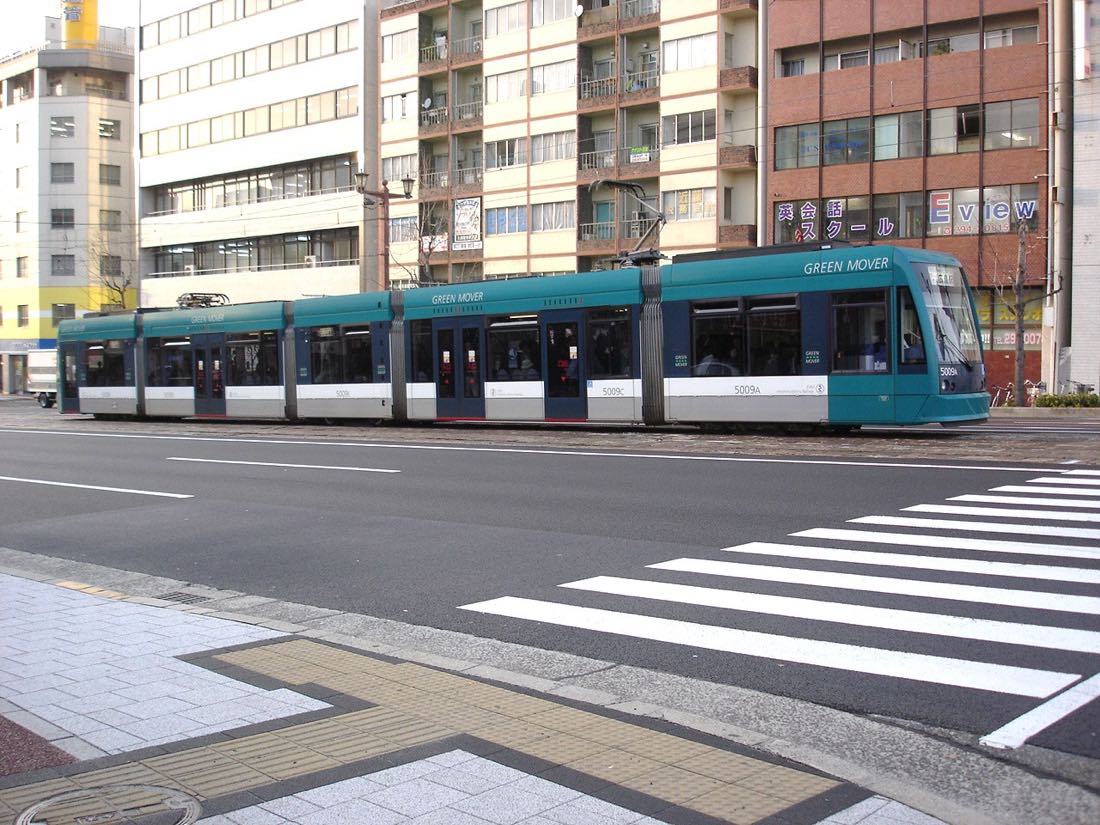
The ¥700 streetcar pass
pays from ride three.
This is a two-line calculation and nobody publishes it. Since Hiroden went flat at ¥240 on 1 February 2025 the all-day pass has had exactly one break-even point, and it lands precisely where a normal Hiroshima day lands. Here is the table, ride by ride — plus the ¥1,000 tier that covers the ferry too, and the one group of people who should buy nothing at all.
Three or more tram rides: buy the ¥700 pass. Two or fewer: pay the ¥240 flat fare each time. Two rides cost ¥480 and the pass loses you ¥220; three cost ¥720 and the pass saves you ¥20. If your day includes Miyajima, jump to a ¥1,000 pass instead — a bare-minimum Hiroshima-plus-island day costs ¥1,120 paid per ride, so the ¥1,000 tier wins on the very first day. And if you already hold a Japan Rail Pass, buy nothing: it covers the JR ferry, the Maple-loop and JR to Miyajimaguchi, so your whole day costs ¥100.
The flat fare made the maths trivial
Why this is now answerableBefore 1 February 2025 you could not answer this question in advance, because a ride cost anywhere from ¥140 to ¥270 depending how far you went. Now every city ride is the same price, so the break-even is a single integer.
Hiroden went to a flat ¥240 adult / ¥120 child fare on 1 February 2025, its first revision in seven years, replacing the old distance-based ¥140–270 scale. The all-day streetcar pass is ¥700, so it pays from your third ride — which is exactly what a Peace Park, castle and station day comes to.
The practical consequence is that you can decide before you leave the hotel. Count the tram rides on your plan for the day. If the answer is three or more, buy the pass at a Hiroden counter, the tourist information desk or on board. If it is one or two, do not — you are handing over ¥220 to ¥460 for nothing.
One thing that catches people: a return trip is two rides, not one. Station to the Peace Memorial Park and back is two, and that is the single most common Hiroshima day. It costs ¥480 and the pass would cost you ¥700. Only when you add a third leg — the castle, Shukkeien, dinner in Hatchobori, a detour to the Teishin annex — does the pass start earning.
Ride by ride: pay as you go vs the ¥700 day pass
The break-evenAdult fares. The pass is ¥700 flat no matter how much you use it, so every row above three is pure gain.
| Rides in one day | Pay per ride | All-day pass | Difference | Buy the pass? |
|---|---|---|---|---|
| 1 | ¥240 · ~$1.50 | ¥700 · ~$4.40 | Pass costs ¥460 more | SKIP |
| 2 | ¥480 · ~$3.00 | ¥700 · ~$4.40 | Pass costs ¥220 more | SKIP |
| 3 | ¥720 · ~$4.60 | ¥700 · ~$4.40 | Pass saves ¥20 — break-even | DEPENDS |
| 4 | ¥960 · ~$6.10 | ¥700 · ~$4.40 | Pass saves ¥260 | WORTH IT |
| 5 | ¥1,200 · ~$7.60 | ¥700 · ~$4.40 | Pass saves ¥500 | WORTH IT |
| 6 | ¥1,440 · ~$9.10 | ¥700 · ~$4.40 | Pass saves ¥740 | WORTH IT |
Children pay ¥120 a ride against a ¥350 child pass, so the child break-even is also three rides — ¥360 against ¥350, a ¥10 saving. Dollar prices convert at ¥157.7 = $1, the rate on 4 August 2026. Treat every $ figure as a snapshot and the ¥ figure as the real price.
Does your actual day hit three rides?
Real daysCount the legs, not the destinations. Out and back is two.
| The day | Rides | Cheapest option | Cost |
|---|---|---|---|
| Station → Peace Park → station | 2 | Pay per ride | ¥480 |
| Station → Peace Park → castle → station | 3 | Day pass | ¥700 |
| Station → Peace Park → Shukkeien → Hatchobori dinner → hotel | 4 | Day pass | ¥700 |
| Hotel in Naka-ku → Peace Park on foot → Hondori on foot | 0 | Walk | ¥0 |
| Miyajima day — tram out, tram back | 2 | Pay per ride | ¥480 + ferry |
| Museum in the morning, Teishin annex, dinner, hotel | 4 | Day pass | ¥700 |
The second row is the classic first day in Hiroshima and it is exactly the break-even. The fifth row looks like a loss on the ¥700 tram pass — but a Miyajima day is where the ¥1,000 passes below take over.
The ¥1,000 passes, and the day that clears them
The other tierA bare-minimum Hiroshima-and-Miyajima day paid ride by ride is ¥240 + ¥240 + ¥200 + ¥200 + ¥240 = ¥1,120. That is the number every ¥1,000 product has to beat, and both of them do.
| Pass | Price | What it covers | Verdict |
|---|---|---|---|
| Hiroden Streetcar & Ferry 1-day | ¥1,000 / ¥550 child | All Hiroden lines plus the Matsudai ferry only. Includes the ¥100 visitor tax, and cuts the Miyajima Ropeway round trip from ¥2,000 to ¥1,500 | WORTH IT |
| Visit Hiroshima Tourist Pass, 1 day / 24hr | ¥1,000, same price for adults and children | All Hiroden lines, both Miyajima ferries, city buses from six operators, and the Maple-loop. Excludes JR, the airport bus and the ¥100 tax — true cost ¥1,100 | WORTH IT |
| Visit Hiroshima Tourist Pass, 2 day / 48hr | ¥1,500 | As above, for two days. The tier that fits a standard two-night stay | WORTH IT |
| Visit Hiroshima Tourist Pass, 3 day / 72hr | ¥2,000 | As above, three days. The old Small / Middle / Wide tiers no longer exist | DEPENDS |
| Visit Hiroshima Tourist Pass, 3 day Middle Area | ¥4,500 | Wider regional coverage. Only worth it if you are pushing well beyond the city and the island | DEPENDS |
| Hiroden 8-hour digital pass | ¥600 | Trams only, eight hours from activation. The cheapest way to clear three rides in an afternoon | DEPENDS |
| Hiroden Digital City Pass | ¥440 | Trams, weekdays 10:00–16:00 only, excluding the Miyajima line west of Nishi-Hiroshima and the Maple-loop | DEPENDS |
| Nothing at all, if you hold a JR Pass | ¥100 | The JR Pass already covers the JR ferry, the Maple-loop and JR to Miyajimaguchi. All you pay is the ¥100 visitor tax | WORTH IT |
The 24-hour trap, and it is worth real money. Paper passes are date-stamped and die at midnight; digital passes run exactly 24, 48 or 72 hours from activation. A digital 24-hour pass activated at 14:00 covers that afternoon and the next morning to 14:00 — for the same ¥1,000 the paper version throws away. If you arrive after lunch, digital is strictly better. Note the Streetcar & Ferry pass covers Matsudai only, so it cannot be used on the JR torii-detour sailings.
The practical bit
Plan your visitThree things that break the calculation
The trapsThe ¥700 pass does not cover the ferry. That is the whole reason the ¥1,000 tier exists. If your day ends on Miyajima, the ¥700 product leaves ¥400 of ferry and ¥100 of visitor tax uncovered and you have bought the wrong thing by ¥100.
The Maple-loop bus is not the tram. It is a separate service, free with a Japan Rail Pass, consolidated to a single route on 18 July 2026. A Hiroden day pass is not automatically a Maple-loop ticket — the Visit Hiroshima Tourist Pass is, and the Hiroden ones are not.
Paper passes die at midnight. A ¥1,000 paper pass bought at 14:00 gives you ten hours. The digital equivalent gives you twenty-four for the same money. This is the single most avoidable waste on this page and it catches people arriving on an afternoon shinkansen.
Walking eats your rides. Hiroshima's centre is compact enough that people who plan four tram journeys take two. Peace Memorial Park to Hondori is under ten minutes on foot, and since 28 March 2026 the Hondori stop is officially subtitled "Peace Memorial Park East" for exactly that reason. If you are staying in Naka-ku you may not clear three rides on any day of the trip.
The Hiroden day pass — the questions people ask
FAQPage schema pairedIs the Hiroshima streetcar day pass worth it?
Only from your third ride. The pass is ¥700 and a single ride is a flat ¥240, so three rides cost ¥720 and the pass saves you ¥20; two rides cost ¥480 and the pass loses you ¥220. Count the legs on your plan — out and back counts as two.
How much is the Hiroden one-day pass?
¥700 for an adult and ¥350 for a child, about $4.40 and $2.20. It covers Hiroden's city streetcar lines for one calendar day and you can buy it at Hiroden counters, the tourist information desk at Hiroshima Station, or on board.
How much is a single Hiroshima tram ride?
A flat ¥240 for adults and ¥120 for children, on every city route regardless of distance. That took effect on 1 February 2025, Hiroden's first fare revision in seven years, and replaced the ¥140–270 distance-based scale that most guides still quote.
Is there a child version of the Hiroden day pass?
Yes, ¥350. Because the child single fare is ¥120, the child break-even is also exactly three rides — ¥360 paid individually against ¥350 for the pass, a saving of ¥10. The Visit Hiroshima Tourist Pass charges the same ¥1,000 for adults and children, which makes it relatively poor value for a child and good value for an adult.
Which Hiroshima pass covers the Miyajima ferry?
Two do, at ¥1,000 each. Hiroden's Streetcar & Ferry 1-day pass covers the Matsudai ferry only but includes the ¥100 visitor tax and cuts the ropeway round trip from ¥2,000 to ¥1,500. The Visit Hiroshima Tourist Pass covers both ferries plus six operators' buses and the Maple-loop, but excludes the tax — so its true cost is ¥1,100.
Does the ¥700 day pass cover the ferry to Miyajima?
No. The ferry is ¥200 each way plus a ¥100 visitor tax, so a ¥700 tram pass leaves ¥500 uncovered. A bare-minimum Hiroshima-and-Miyajima day paid ride by ride is ¥1,120, which means the ¥1,000 passes win by ¥120 on the very first day and by ¥360 with one extra ride.
Should I buy a Hiroshima pass if I have a JR Pass?
No — and this is the biggest single saving on this page. A Japan Rail Pass already covers the JR Miyajima ferry, the Maple-loop bus and JR to Miyajimaguchi. A JR Pass holder doing the Peace Memorial Park and Miyajima on the same day can get through it for ¥100, which is the visitor tax and nothing else.
Is the digital pass better than the paper one?
Yes if you arrive after lunch. Paper passes are date-stamped and expire at midnight; digital passes run exactly 24, 48 or 72 hours from activation. A digital 24-hour pass activated at 14:00 covers that afternoon and the following morning to 14:00, for the same ¥1,000 the paper version throws away.
Passes and city transport tickets
Buy itThe ¥700 pass itself is a counter purchase in Hiroshima. These are the products worth comparing against it before you land — and remember that a JR Pass holder should buy none of them.