Hondori:
the roof over a wet afternoon.
Half a kilometre of covered shopping street running from the Peace Park end of the centre to Hatchobori. On a dry day it is a ten-minute walk to somewhere else. On a wet one it is the spine of the city and the reason you do not have to abandon the afternoon.
Hondori is a free, roofed, pedestrian-only shopping street about half a kilometre long, running east from the Peace Park end of the centre to Hatchobori. Dry, it is a 10-minute walk between two places you actually wanted to go. Wet, it is where a Hiroshima afternoon goes to survive: two hours of shops, cheap food and dry pavement without ever opening an umbrella. Okonomimura is a few minutes off it.
In this city, a roof is a genuine attraction
Why it matters hereHiroshima's wet-weather options are thin, and Hondori is the piece of infrastructure that holds the rest of them together.
Tsuyu, the rainy season, normally runs about 6 June to 19 July, and July is the wettest month at 279.8mm — not August, which most guides get wrong. September brings typhoons. On those days the honest list of things to do in this city gets short very quickly: the museum, the art museums, an okonomiyaki counter, and the arcades. Miyajima in rain is a wasted ¥200 crossing. Hondori is what connects the surviving options into a single walk instead of four separate dashes between taxis.
Geographically it does something useful. The west end sits a few minutes from the Peace Park; the east end runs into Hatchobori, the department-store and nightlife district. So the standard wet-day sequence — museum in the morning, lunch under cover, shops and a coffee, then dinner and drinks — is a single continuous line with a roof over most of it. That is not a small thing when the alternative is standing in a downpour deciding.
Hiroshima is a comfortable, well-run, entirely ordinary mid-size Japanese city. The bomb took the old fabric and the rebuild was practical rather than picturesque. Come for the Peace Park, the island and the food — not for the streetscapes. The mistake almost everyone makes is giving the important part four hours and the ordinary part none.
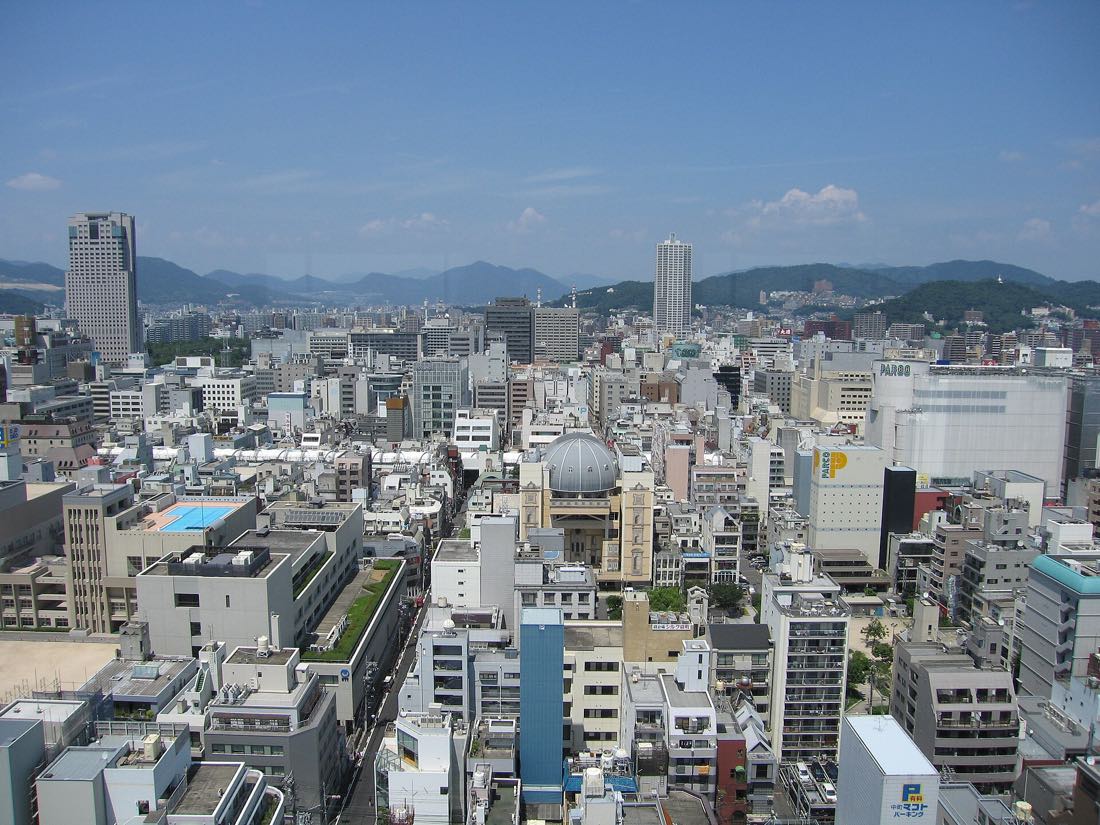
Do not expect charm. This is a rebuilt post-war shopping street: chain stores, drugstores, a hundred-yen shop, shoe shops, a Book-Off, arcades and cheap eating. It is genuinely useful and entirely ordinary, which — as the rest of this site keeps arguing — is most of what Hiroshima is.
When Hondori is worth walking
Hour by hourShop hours vary by unit and we have not verified individual opening times — this is the shape of a normal weekday, not a schedule.
Comfortable. Coffee, drugstores, and the walk east to Hatchobori.
What is actually on and around Hondori
Along the arcadeWest to east, roughly. Everything here is within five minutes of the covered stretch.
| What | Where on the line | Time | Wet-day value | Verdict |
|---|---|---|---|---|
| The arcade itself | Kamiyacho end through to Hatchobori | 30 min | The reason the day works | DEPENDS |
| Okonomimura | A few minutes south-east of the midpoint, in the Shintenchi block | 60–90 min | High — around two dozen stalls on floors 2–4, hours vary by stall | DEPENDS |
| Standalone okonomiyaki counters | Scattered on and behind the arcade | 40 min | High | WORTH IT |
| Hatchobori department stores | East end | 60 min | High — big indoor floorplates | DEPENDS |
| Peace Memorial Park | About 5 minutes west of the west end | 45–90 min | Low — it is a park | Not badged — see the page |
| Nagarekawa nightlife | South of the east end | An evening | High | WORTH IT |
| Oysters, in season | Restaurants around and behind the arcade | 60 min | High, October to March | WORTH IT |
Okonomimura's location, not its verdict: it is the multi-storey building of stacked okonomiyaki stalls a few minutes off the arcade in the Shintenchi block — around 23 stalls on floors 2–4, and the official source explicitly declines to publish building-wide hours, so treat any page quoting "11:00–22:00" as invented. It is genuinely good and genuinely touristy at once, and locals mostly eat at standalone counters: Micchan Sohonten (¥960 for soba or udon niku-tama, closed Tuesdays, walk-in only), Nagataya (¥1,000–1,999, closed Tuesdays) and Hassei. The full call is on the Okonomimura page. Hiroshima oysters are a winter dish — roughly October to March, peaking December to February. Come in July and you'll find the farmed summer Kaki Komachi variety and a lot of restaurants simply not doing oysters. The grilled-oyster stalls and the festivals are a November-to-March thing.
Hondori, practically
Plan your visitEating your way along it
Book itThe arcade is free and needs no guide. What is worth paying for is someone who knows which of the counters behind it are the ones locals use. We do not republish prices, ratings or review counts.
Hondori — common questions
FAQPage schema pairedWhat is Hondori in Hiroshima?
A free, covered, pedestrian-only shopping arcade about half a kilometre long in the centre of the city, running from near the Peace Park east to Hatchobori. It takes 10 minutes to walk and about two hours to spend properly on a wet day.
Is Hondori worth visiting?
As a destination, no — it is a 10-minute walk you would make anyway. As the roof over your afternoon, absolutely, and in tsuyu (about 6 June to 19 July, with July the wettest month at 279.8mm) it is close to essential. That is why the verdict is DEPENDS rather than SKIP: the weather makes the call, not the arcade.
How do you get to Hondori from Hiroshima Station?
Hiroden lines 1, 2 or 6, about 10 to 15 minutes, getting off at Kamiyacho-higashi for the west end or Hatchobori for the east end. The flat fare is ¥240 ($1.52). Hiroden went to a flat ¥240 adult / ¥120 child fare on 1 February 2025, its first revision in seven years, replacing the old distance-based ¥140–270 scale. The all-day streetcar pass is ¥700, so it pays from your third ride — which is exactly what a Peace Park, castle and station day comes to.
Where is Okonomimura, and is it on Hondori?
It is a few minutes south-east of the arcade's midpoint, in the Shintenchi block — close enough to be part of the same walk, not actually on it. It holds around 23 stalls on floors 2–4, and hours vary by stall; the official source does not publish building-wide opening times. Whether it is the right place to eat is answered on the Okonomimura page; locals mostly use standalone counters like Nagataya, Micchan and Hassei.
What can you do in Hiroshima when it rains?
Hondori and the connected arcades, the Peace Memorial Museum, the art museums at ¥2,500, ¥510 and ¥350, an okonomiyaki counter or a cooking class — and that is most of the honest list. Mitaki-dera is the one outdoor thing a wet day improves. Tsuyu runs about 6 June to 19 July and July is the wettest month at 279.8mm; the full sequence is on the rainy-day page.
What time do the shops on Hondori open?
Broadly 10:00 to 20:00, varying by unit, with restaurants running later towards the Nagarekawa end. We have not verified individual hours. The arcade itself is a public street and is walkable at any hour — at 22:00 it is shuttered, well lit and a perfectly good route back to a hotel.
Is Hondori good with kids or a pushchair?
Yes — 500m of flat, roofed, entirely traffic-free street lined with ¥100 shops and cheap food, which makes it the easiest hour in the city with small children. See Hiroshima with kids for the rest of the day.
Is there anything historic on Hondori?
Not on the arcade itself — this stretch was destroyed on 6 August 1945 and rebuilt as commercial street. The historic fabric that survived is a short walk away: the A-Bomb Dome, and the Teishin Hospital annex that opened as a free museum on 1 May 2026, about 1.5km north-east.