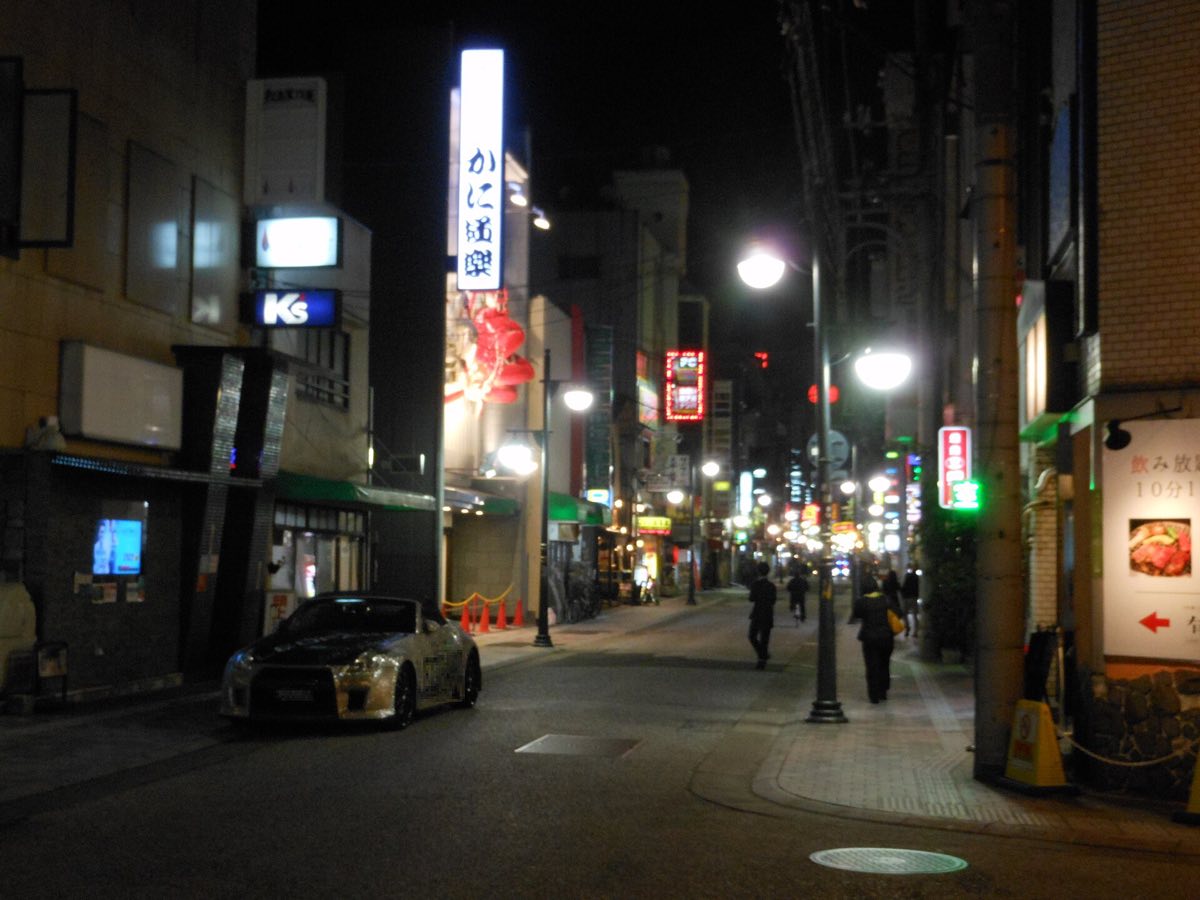
Six food tour formats.
They buy
different things.
A cooking class and a bar crawl both appear under "Hiroshima food tour" and they solve opposite problems. This page sorts them by what they actually get you — and deliberately publishes no prices, star ratings or review counts, because none could be verified for this build.
Take a downtown food tour on your first evening if you want breadth and somebody ordering in Japanese; take an okonomiyaki cooking class if you want to leave able to make the dish; take the bar hop if the goal is Nagarekawa rather than dinner. The culinary bike tour is the answer to Hiroshima's spread-out counters, and Saijo sake is a half-day out of the city. We publish no tour prices or ratings — check the live pages.
What a Hiroshima food tour actually buys
Answer firstThree things, in order of value. First, access: an eight-seat counter with a hand-written Japanese menu and a curtain over the door is not hard to enter, but it is hard to enter confidently, and a guide removes that entirely. Second, ordering: somebody who knows what this shop is good at, in a room with no photo menu. Third, routing: the counters worth eating at are spread across Naka-ku, Hatchobori and the station's western strips, and a first-timer will not link three of them efficiently.
What it does not buy is cheaper food. Every format here costs more than eating the same dishes alone, and we can now say by how much on the food side: a standard okonomiyaki at Micchan Sōhonten is ¥960, tsukemen runs ¥900–1,300, and grilled oysters at a Miyajima stall are ¥400–600 a pair. A tour is buying the first two items on that list, not the third plate.
A deliberate omission on this page: no tour prices, no star ratings and no review counts. None of them could be verified for the August 2026 build, and a stale price on a commercial comparison page is the worst kind of wrong — it is the number a reader budgets against. Every card below links to the live product page, where the current price and rating are shown by the operator. What we can compare honestly is format, and that is what the table does.
One thing a tour genuinely solves that is now measurable: the Tuesday problem. Micchan Sōhonten and Nagataya, the two counters this city sends people to, both close on Tuesdays — an operator running that night already knows where else to go.
The six formats, by what they solve
ComparedRead the "best for" column first. It is the only one that should decide this.
| Format | What happens | Best for | Watch out for | Verdict |
|---|---|---|---|---|
| Downtown food tour | Several counters in one evening, guide orders throughout | A first night; breadth; solo travellers | You eat what the route eats — narrow diets are a poor fit | WORTH IT |
| Okonomiyaki cooking class | You build the 5 layers yourself on a teppan | Understanding the dish; rainy afternoons; families | It is a class, not a dinner crawl — one dish, done properly | WORTH IT |
| Ramen / tsukemen tasting | Noodle counters back to back — one product's own title says 2 shops in 2 hours | Noodle people; a short evening; ticket-machine anxiety | Two bowls of noodles is genuinely filling | WORTH IT |
| Bar hopping | Nagarekawa and Yagenbori, several rooms, food alongside drinks | Drinkers; second nights; getting into the multi-storey bars | Drinking-led, so it is a night out rather than a meal | WORTH IT |
| Culinary bike tour | Ride between eating stops, okonomiyaki and oysters typically included | Covering ground; daytime; cyclists | Oyster content is seasonal — peak is Dec–Feb, broadly Oct–Mar | DEPENDS |
| Sake tasting / Saijō | Brewery tastings — one city product's own title says 7 breweries in 2 hours; the Saijō versions are half-days out | Sake drinkers; day 2 or 3; a non-food-heavy option | Going independently is cheap: under ¥700 each way plus a ¥500 cash tasting | WORTH IT |
No tour price column, no rating column, and that is the point. GetYourGuide prices, star ratings and review counts could not be verified for this build, so publishing them would be guessing. The 2 duration figures quoted above come from the products' own titles. The comparison that is verified is what the same food costs unguided: okonomiyaki ¥960, tsukemen ¥900–1,300, oysters ¥400–600 a pair, anago-meshi ¥2,500–3,000. Dollar prices convert at ¥157.7 = $1, the rate on 4 August 2026. Treat every $ figure as a snapshot and the ¥ figure as the real price.
The decision most people are actually making
Head to headA food tour
Buys access and breadth. You will eat 4 or 5 things across several rooms you would not have entered, with somebody ordering, and you will finish the evening knowing which doors you can push open by yourself tomorrow. The right choice for a first night in the city.
Check the downtown tour ↗A cooking class
Buys depth in one dish. You come out able to layer okonomiyaki properly — crêpe, cabbage, pork, noodles, egg — which is a souvenir with a longer life than a photograph. Better on a rainy afternoon than an evening, and better as a second activity than a first.
See the class ↗Should you book anything at all?
Who it suitsHow far ahead each format needs booking
Book byHiroshima food tours run small — the constraint is seats at a counter, not coach capacity. These are our planning recommendations, not operator policy.
The four we would start from
Book itPrices, ratings and review counts are shown on the operator's own page and change constantly — we publish none of them here because none could be verified for this build.
Food tour questions, answered
FAQPage schema pairedAre Hiroshima food tours worth it?
Yes for a first evening, and the reason is access rather than food. A guide gets you into 3 or 4 counters with no English menu and orders what each is good at — which is the one thing a visitor genuinely cannot do alone here. If you have already eaten across Japan, skip the downtown crawl and take the bike tour or the Saijo sake half day instead.
How much do Hiroshima food tours cost?
We do not publish tour prices, because none could be verified for the August 2026 build — they are shown live on each operator's page and move constantly. What we can price is the alternative: eating the same dishes alone costs about ¥960 for okonomiyaki, ¥900–1,300 for tsukemen and ¥400–600 for a pair of grilled oysters. All 6 tour formats cost more than that. You are buying access and ordering, not cheaper food.
Which Hiroshima food tour is best?
It depends what you want, which is why the table above has 6 rows and no ranking. Breadth on a first night: the downtown food tour. Learning the dish: the okonomiyaki cooking class. A night out: the bar hop. Covering ground: the culinary bike tour. Noodles: the ramen tasting. A half day out of the city: Saijo sake.
Is a cooking class better than a food tour?
Different products. A class gives you 1 dish, done properly, with your own hands on the teppan — you leave able to layer okonomiyaki yourself. A tour gives you 4 or 5 things across several rooms and no skills. If you have 2 evenings, do both, in that order: tour first for context, class second.
Do food tours include oysters?
Some advertise them, and the honest answer is that it depends on the month. Peak is December to February, broadly October to March; outside that window the oyster element may be reduced, though non-spawning summer natsu-kaki do exist. One caution: the February 2026 Miyajima Oyster Festival was cancelled for lack of oysters, so supply has been tight. Check the product page for your dates and read the oyster page.
Are food tours suitable for vegetarians?
Mostly not, without warning the operator. Standard Hiroshima routes are built on pork, bonito flakes and dashi, and 0 of the formats here should be assumed vegetarian-safe without asking. Message the operator before booking, and read the vegetarian page, which is honest about how hard this city is.
How far ahead should I book?
Allow 1 to 3 weeks for the downtown tour and the cooking class, and about a week for bar-hopping and noodle formats. Anything in the first half of August should be treated as a month-ahead booking — the 6 August ceremony fills the city and the museum runs reservation-only from 8 to 16 August 2026.
Can I do this myself instead?
Yes, and on a second night you should. The districts page gives you Nagarekawa, Yagenbori, Ekinishi and Yokogawa with the tram stops; the okonomiyaki page gives you Micchan at ¥960 and Nagataya at ¥1,000–1,999 with their hours. ⚠️ Just not on a Tuesday, when both of those close. The saving is the tour price; the cost is roughly 1 evening spent learning which doors open.