Hiroshima is
harder
than Kyoto or Tokyo
Not impossible — harder. The city's signature dish has pork in it, bonito flakes on it and usually egg through it, and fish stock reaches into miso soup, noodle broth, sauces and simmered vegetables. This page tells you what genuinely works and refuses to name restaurants it could not verify.
You will eat well if you plan and ask, and badly if you assume. Okonomiyaki is not vegetarian by default — pork, bonito flakes and usually egg — and dashi, fish stock, is in far more than you expect. What reliably works: Indian restaurants, convenience-store and supermarket assembly, temple-style cooking where you can find it, and a cooking class where you control what goes on the griddle. Learn 3 phrases before you land.
The two things that make this hard
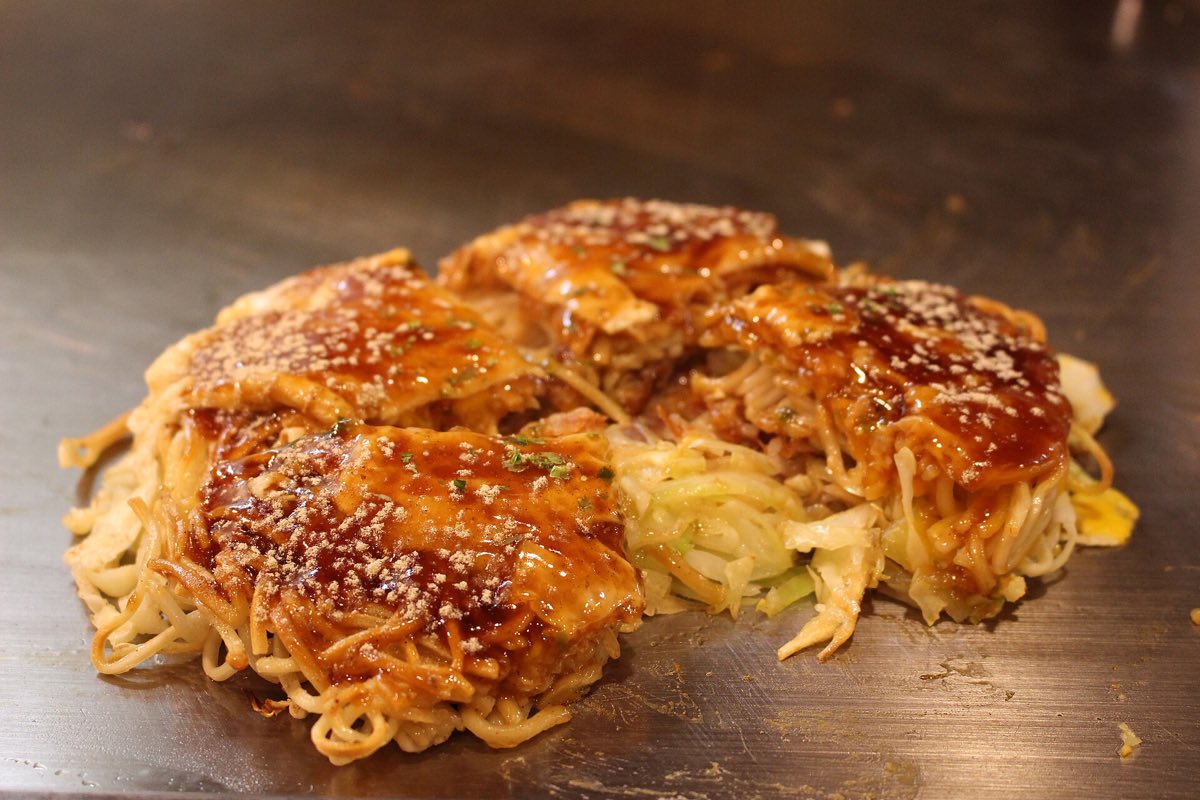
Answer firstOne: the signature dish is built on pork. Hiroshima okonomiyaki layers pork belly over the cabbage — the rendering fat is part of how the cabbage cooks — then finishes the plate with bonito flakes, and there is an egg in the standard build. That is three separate problems in one dish, and the griddle it is cooked on has had pork on it all evening. Some counters will make a version without the meat if you ask; we verified 0 shops as offering one, so ask, and ask before they start.
Two: dashi. Japanese stock is usually made with katsuobushi, dried bonito, and it is not treated as a meat or fish ingredient by most kitchens — it is treated as salt. It turns up in miso soup, noodle broth, dipping sauces, simmered vegetables, tamagoyaki, and often in the okonomiyaki batter and sauce themselves. A dish can be visibly vegetable-only and still contain it. This is the single most common way a well-intentioned meal goes wrong in Japan, and it is not specific to Hiroshima.
Where Hiroshima differs from Kyoto or Tokyo is scale and tradition. Kyoto has a centuries-old temple-cuisine culture and a dense cluster of restaurants serving it; Tokyo has enough restaurants that any niche is covered several times over. Hiroshima is a mid-size city whose food identity is a pork-and-bonito griddle dish and an oyster. Say that plainly rather than pretending otherwise — you can eat well here as a vegetarian, but you will do more of the work yourself.
One editorial note about what is not on this page. We are not listing vegetarian restaurants by name, because we could not verify a single one's current status, address, opening hours or menu for the August 2026 build — and a closed vegan café that a travel page still recommends is exactly the failure that leaves somebody hungry at 20:00 in an unfamiliar city. Use a current source and check that reviews are recent. Method below.
The city's dishes, honestly assessed
ComparedGreen means it can work. Read the right-hand column before you order anything.
| Dish | Vegetarian as served? | The problem | What to ask |
|---|---|---|---|
| Okonomiyaki | No | Pork belly, bonito flakes on top, a fried egg sheet as the top layer, dashi possible in batter and sauce, shared griddle | Ask for it without pork and without bonito, before cooking starts. Egg is usually removable too |
| Tsukemen | No | Boiled pork or chashu as standard; the cold dip is soy and dashi with rice vinegar and chilli oil | Ask about the dip first — removing the meat does not fix the sauce |
| Ramen | Rarely | Pork or chicken bone broth is the entire product | Vegan ramen exists in Japan but is a specialist product, not a menu variant |
| Anago-meshi | No | It is eel, over rice cooked in eel stock | Nothing to ask. This one is simply not available to you |
| Oysters | No | Shellfish, and pescatarians should note the season is Oct–Mar anyway | n/a |
| Miso soup | Usually not | Dashi. Almost always bonito-based unless stated otherwise | "Katsuo-dashi wa haitte imasu ka?" — is there bonito stock in it? |
| Vegetable tempura | Often yes | The dipping sauce (tentsuyu) usually contains dashi; shared fryer oil is possible | Ask for salt instead of the dipping sauce |
| Inari sushi, plain onigiri | Often yes | Fillings vary — check the label; some rice is seasoned with dashi | Read the package; konbu and umeboshi fillings are the safer picks |
| Sake | Yes | Rice, water, koji, yeast. No animal products | Nothing — this one is easy |
No restaurant is named in this table on purpose. Dishes are stable; individual restaurants' vegetarian options are not, and we verified none of them for this build.
Three phrases, and how to use them
Say thisThe most useful of the three, because it is specific in a way that "I am vegetarian" is not. Bejitarian is a known word in Japan but is widely understood to permit fish, and in a small counter that misunderstanding is the whole problem. Say the ingredients, not the identity.
Add "tamago mo" (also egg) if you need it. Say it before ordering, not after.The question that catches the invisible ingredient. Ask it about miso soup, any broth, any dipping sauce and any simmered vegetable dish. Staff generally answer it accurately and without irritation — it is a normal question, and roughly 8 times out of 10 the answer will be yes.
The practical request at an okonomiyaki counter. Deliver it before the cook starts the layers, because once the pork is on the cabbage the dish cannot be unbuilt. It does not solve the bonito flakes or a dashi-containing sauce — ask about those separately.
A written card in Japanese listing what you do not eat is more reliable than pronunciation in a noisy room, and it can be handed across a counter. Have it on your phone in 1 screenshot so you are not scrolling while a cook waits.
Small Hiroshima counters run 5 or 6 fixed dishes on one griddle. A request to redesign one is not rudeness on your part or unhelpfulness on theirs — it is genuinely outside what the shop does. Take the answer and move to the next door.
What actually works in Hiroshima
RankedIndian and South Asian restaurants
Vegetarian cooking is native to the cuisine rather than a substitution, staff understand the request immediately, and there is no dashi anywhere near it. Hiroshima has them in the central Naka-ku grid and around the station. Vegans should still ask about ghee, cream and yoghurt in the curries and the naan. We did not verify any specific restaurant — search on the day and check that the reviews are recent.
A cooking class, where you control the griddle
This is the genuinely clever answer, and almost nobody suggests it. In a class you are building the dish yourself and the ingredients are laid out in front of you — leaving the pork out and skipping the bonito is a request made at booking rather than shouted across a counter mid-cook. Message the operator before you book to confirm they can accommodate it; do not assume.
Convenience stores and supermarkets
Unglamorous and genuinely effective. Onigiri with konbu or umeboshi, inari sushi, edamame, tofu, salads, fruit, bread, instant miso where you can read the label. A supermarket basket assembled once covers 2 or 3 breakfasts and a lunch and removes all the pressure from the day. Read labels — some rice and dressings carry dashi.
Temple-style and Buddhist cooking (shojin ryori)
The historical Japanese vegetarian tradition, built without meat, fish or fish stock. Hiroshima and Miyajima have significant temples, and temple-adjacent dining exists in Japan — but we could not verify that any specific temple here serves meals to visitors, or on what terms. Treat it as something to enquire about rather than plan around, and read the Daishoin page for the temple itself.
Izakaya, ordered carefully
An izakaya menu has plenty of vegetable dishes — edamame, grilled aubergine, pickles, agedashi tofu, salads, chips — and most of them are 1 question away from being safe. The problem is the ones that are not: the tofu is often served in dashi broth, the dressings often contain it, and the atmosphere is not built for interrogation. Go early, when staff have time.
Okonomiyaki without pork, at a counter
Some counters will do it and some will not, and there is no way to know from outside. It is worth asking, because eating the city's dish is part of being here — but go in expecting a no roughly as often as a yes, and remember that removing the pork does not remove the bonito, the egg or a dashi-based sauce. None of the 3 counters we name elsewhere on this site were verified as offering it.
The method, since we are not naming names
How to find placesSearch on the day, not before the trip, and use a source that shows dates. A vegetarian restaurant listing without a recent review is a coin flip — small independent restaurants in a mid-size Japanese city close, move and change owners, and the travel-blog layer of the internet does not notice for years.
The check that matters: is there a review or a post from within the last 3 months? If not, phone or walk past before you commit an evening to it. Applying that one filter removes most of the disappointment that vegetarians report about Japan.
Then use a fallback plan rather than a single target. Have 1 confirmed option and 2 backups within walking distance, and keep a supermarket in reserve — you will use it at least once, and having decided that in advance is the difference between a fine evening and a bad one.
One name that recurs in vegetarian and café searches on Miyajima is Sarasvati. We did not verify its menu, its hours or whether it currently offers vegetarian dishes — we are giving you the listing so you can apply the recent-review test yourself rather than taking our word or anyone else's. Two sweet things that are safe on the island if all else fails: momiji manju is a red-bean sponge cake, and it is sold everywhere on the Omotesandō.
Finally, be realistic about the trip shape. If you are here for 2 days, eat 1 planned vegetarian meal and assemble the rest, and put your food energy into Saijo sake, which is entirely vegan, and the things you can eat. Trying to force the city's signature dishes to work is how a short trip becomes an argument with a menu.
The one booking that reliably helps
Book itA class where you build the dish yourself is the most controllable vegetarian option in this city — but confirm with the operator before booking, because none of these products were verified as offering a meat-free version. We publish no tour prices or ratings; none could be verified.
Vegetarian questions, answered
FAQPage schema pairedIs okonomiyaki vegetarian?
No, not as served. The standard Hiroshima build has pork belly as 1 of its 5 layers, an egg sheet as another, and bonito flakes on top, and the batter or sauce may contain dashi. Some counters will leave the pork out if you ask before cooking starts — but 0 of the named shops, including Micchan Sōhonten at ¥960 and Nagataya, were verified as offering a meat-free version. A cooking class is the reliable route to eating this dish.
Is it hard to be vegetarian in Hiroshima?
Harder than Kyoto or Tokyo, and we would rather say so than sell you comfort. Kyoto has a temple-cuisine tradition and Tokyo has scale; Hiroshima is a mid-size city whose food identity is pork-and-bonito okonomiyaki and oysters. It is entirely workable with 3 phrases and a fallback plan, and frustrating without them.
What is dashi and why does it matter?
Japanese stock, usually made from dried bonito, and it is the invisible ingredient that catches most vegetarians. It is in miso soup, noodle broths, dipping sauces, simmered vegetables and often in okonomiyaki batter and sauce, and kitchens generally think of it as seasoning rather than as fish. Ask "katsuo-dashi wa haitte imasu ka?" and expect the answer to be yes about 8 times out of 10.
What should I say in Japanese?
Three lines. "Niku to sakana wo tabemasen" (I don't eat meat or fish) — better than saying you are vegetarian, which is widely read as permitting fish. "Katsuo-dashi wa haitte imasu ka?" (does it contain bonito stock?). "Niku nuki de onegaishimasu" (without meat, please). Carry them written down in 1 screenshot as well as spoken.
Are there vegetarian restaurants in Hiroshima?
Yes, and we are deliberately not vouching for any, because we could not verify a single one's current status, hours or menu for this build — recommending a closed café is worse than recommending nothing. Sarasvati on Miyajima is one name that recurs, unverified. Search on the day and apply 1 filter: is there a review from the last 3 months? If not, walk past before committing your evening.
Can vegans eat in Hiroshima?
Yes, with more work again — egg and dashi both have to go, which rules out several of the compromises available to vegetarians. Indian restaurants remain the most reliable option (ask about ghee, cream and yoghurt), supermarket assembly works, and sake is vegan by composition: Kamotsuru's ¥500 cash tasting at Saijō is 1 experience needing no negotiation. Assume 0 spontaneous vegan meals at okonomiyaki counters.
What can I eat at a convenience store?
More than you would think, and it is open at 23:00 when nothing else is. Onigiri with konbu or umeboshi, inari sushi, edamame, tofu, salads, fruit, bread. Read the labels — some rice and dressings carry dashi. One supermarket basket covers 2 or 3 breakfasts and a lunch and takes all the pressure off the trip; more on the practical page.
Do food tours work for vegetarians?
Usually not without warning the operator first. Hiroshima routes are built around pork, bonito and dashi, so treat 0 of the 6 formats on the food tours page as safe by default. Message before booking; a good operator will tell you honestly whether they can work with it, and that reply tells you what you need to know.