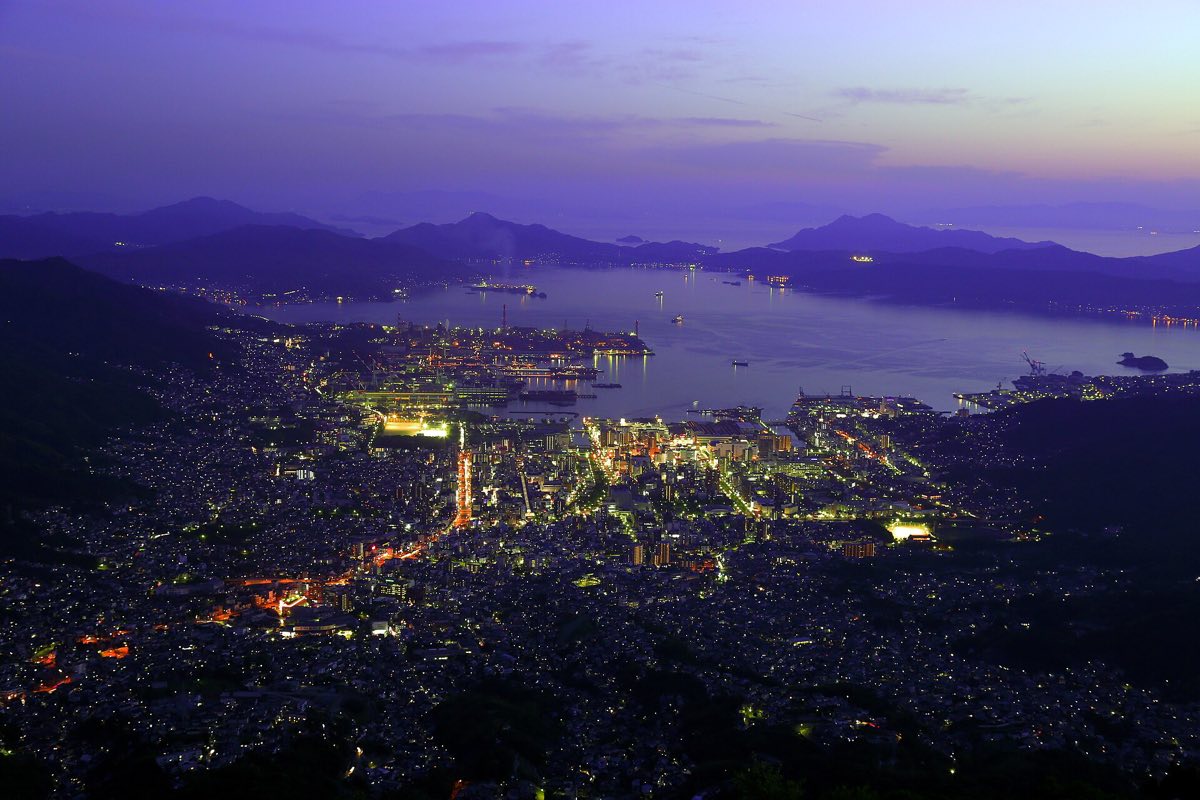
Hiroshima after dark:
the evening slot nobody books.
The A-Bomb Dome is lit and free and better at this hour. The riverbanks are the best free walk in the city. And the Peace Memorial Museum runs a reservation-only evening slot that goes to 19:30 in August, which almost no visitor uses and which is the best move available here.
Three things make a Hiroshima evening. The A-Bomb Dome is illuminated, free and open to the air at every hour, and the riverbanks around it are the best free walk in the city. The museum's evening slot is reservation-only and runs to 19:30 in August — capped at about 300 per 30 minutes, and almost nobody books it. And Nagarekawa, south of Hatchobori, is where the city actually drinks. Add a Carp game if the fixture falls right and the evening is settled.
Book the museum's evening slot. Nobody does.
The moveIt is reservation-only, it is capped, it is quiet, and the city itself promotes it as the uncrowded option.
The Peace Memorial Museum's extended-hours slots are online-reservation-only all year — both the 07:30–08:30 morning slot and the evening one — and capped at roughly 300 people per 30 minutes. The evening window moves with the season: 17:30–18:30 from March to July and September to November, 18:30–19:30 in August, and 16:30–17:30 from December to February. Booking opens 90 days ahead, through Asoview domestically and Klook for overseas visitors.
Why this matters: the museum's officially acknowledged peak is 11:00–14:00, which the local press once described as 「通勤電車並み」 — like a commuter train. FY2025 admissions were 2,580,926, a third consecutive record, and congestion has at times been serious enough that entry was temporarily suspended for safety. The evening slot is the same building with a few hundred people in it. It costs the same ¥200 ($1.27).
From 8 to 16 August 2026 the Peace Memorial Museum takes no walk-ups at all: online reservation only, capped at 1,000 people an hour, released 90 days ahead. Outside that window the 11:00–14:00 block is pre-booked entry only. The museum opens at 7:30 and almost nobody uses it.
The scheduling gift, if your dates land on it: on 6 August the museum runs to 21:00 and the Toro Nagashi lanterns float on the Motoyasu River from 18:00 to 21:00 a few metres away. Booking the evening slot lets you do both. Everything about that day — including the fact that the park is closed to the public 05:00–09:00 that morning — is on the 6 August page.
The Dome and the riverbanks
Free, and better after darkThe A-Bomb Dome — the Hiroshima Prefectural Industrial Promotion Hall before 8:15, Genbaku Dome to this city, and formally the Hiroshima Peace Memorial under UNESCO — is exterior-only at any hour, and it is illuminated at night. There is no ticket, no gate and no closing time. Most visitors see it at 11:00 with a tour group behind them; at 21:00 there are usually a handful of people on the bridge and the river is doing most of the work.
The Motoyasu and Ota riverbanks run for kilometres and are lit, flat and quiet. From the Dome you can walk south past the park's east edge and on towards Hondori, or north-east towards the castle moat, in about 20 minutes either way. It is free, it is safe, and it is the closest thing this rebuilt city has to a set-piece evening walk.
The entire Peace Memorial Park is non-smoking — that is the only hard posted rule, and there is no published code of conduct beyond it, which is itself worth knowing.
One thing to correct: Miyajima's illuminated torii is not an evening you can bolt on. The lights come on 30 minutes after sunset and go off at 23:00, but you cannot enter the shrine during illumination — it is a view from the shore or a boat — and the last JR ferry off the island is 22:14. Any article implying an evening stroll through the shrine corridors is wrong. If you want the lit gate properly, that is the argument for staying over.
Every Hiroshima evening, priced
ComparedTimes are typical rather than guaranteed. Trams are a flat ¥240 ($1.52) and run until roughly midnight on the main lines.
| Evening | When | Price | Booking | Verdict |
|---|---|---|---|---|
| The museum's evening slot | 18:30–19:30 in August · 17:30–18:30 Mar–Jul and Sep–Nov · 16:30–17:30 Dec–Feb | ¥200 ($1.27) | Reservation only, ~300 per 30 min, opens 90 days ahead | Not badged — see the page |
| The illuminated Dome | Any hour | Free | None | Not badged — see the page |
| The riverbank walk | Any hour | Free | None | WORTH IT |
| Carp baseball | Evenings in season | Sells out — buy early at carp.co.jp | Essential, well ahead | WORTH IT |
| Nagarekawa — the drinking district | From about 19:00 | Varies widely | None, but a guided crawl solves the door problem | DEPENDS |
| Okonomimura | Evening | Around two dozen stalls; hours vary by stall | None | DEPENDS |
| Hondori after the shops shut | From about 20:00 | Free | None | DEPENDS |
| The lit torii from Miyajima | Lights on 30 min after sunset, off 23:00 · last JR ferry 22:14 | ¥200 ferry + ¥100 tax | None — but you cannot enter the shrine when it is lit | DEPENDS |
| Toro Nagashi lanterns, 6 August | Rite 17:30 · floating 18:00–21:00 | ¥1,000 per lantern, cash only · watching is free | No booking — but lanterns can sell out | Not badged — see the page |
If you have one evening: museum evening slot, then the Dome and the riverbank on the walk back. If you have two, add Nagarekawa or a Carp game. If you have three, the third one belongs on Miyajima overnight rather than in the city.
Nagarekawa, and how not to waste it
Where the city drinksNagarekawa sits just south of Hatchobori and east of Hondori, and it is a dense grid of small bars stacked several floors up in narrow buildings. That vertical layout is the problem for a visitor: the good places are behind unmarked doors on the fourth floor of a building with a lift and a stack of signs you cannot read. Wandering produces the ground-floor chain izakaya, which are fine, and misses the point.
This is one of the few cases where a guided bar-hop earns its money — not for the drinks, but because it opens three or four doors you would not have opened, and it teaches you how to read the buildings for the rest of the trip. The alternative that works without a guide is to eat first at a counter — the standalone okonomiyaki counters, a tsukemen shop, an oyster bar in season — and treat the drinking as a second act rather than the plan.
Hiroshima oysters are a winter dish — roughly October to March, peaking December to February. Come in July and you'll find the farmed summer Kaki Komachi variety and a lot of restaurants simply not doing oysters. The grilled-oyster stalls and the festivals are a November-to-March thing.
For a late snack on the way back, the Momijido branch inside ekie at Hiroshima Station runs to 21:00 with no closing days — the only reliable late source of fried momiji manju in the city — and Ajiroya at the station's Shinkansen gate opens 06:00–20:00 for anago-meshi. Both are covered on the station area page.
Hiroshima after dark, practically
Plan your eveningGuided evenings, and the doors you would not open
Booking and getting thereNagarekawa is the one part of this city where a guide changes what you get rather than just explaining it. We do not republish prices, ratings or review counts — open the link for the live figure.
Hiroshima at night — common questions
FAQPage schema pairedIs the A-Bomb Dome lit up at night?
Yes — it is illuminated, it is free, and there is no gate or closing time, because you only ever see it from the outside. Most visitors see it at 11:00 in a crowd; at 21:00 there are usually a handful of people on the bridge. Hiroden line 2 or 6 to Genbaku Dome-mae, about 15 minutes from Hiroshima Station at the flat ¥240 ($1.52) fare.
Can you visit the Peace Memorial Museum in the evening?
Yes, and hardly anyone does. The evening slot is reservation-only all year, capped at about 300 people per 30 minutes: 18:30–19:30 in August, 17:30–18:30 from March to July and September to November, and 16:30–17:30 from December to February. Booking opens 90 days ahead — Asoview domestically, Klook for overseas visitors. Admission is the same ¥200.
What is there to do in Hiroshima at night?
The illuminated Dome and the riverbanks for free, the museum's evening slot for ¥200, a Carp game in season, Okonomimura or a standalone okonomiyaki counter, and Nagarekawa for drinking. It is a good one-night city and not a two-night one — the second evening is better spent on Miyajima.
Where is the nightlife in Hiroshima?
Nagarekawa, immediately south of Hatchobori and east of Hondori — a dense grid of small bars stacked 4 and 5 floors up narrow buildings, busy from about 19:00. The good ones are behind unmarked doors above street level, which is why a guided bar-hop earns its money here in a way it would not in most cities.
Can you see the Miyajima torii lit up at night?
You can see it lit — the illumination comes on 30 minutes after sunset and goes off at 23:00 — but you cannot enter the shrine while it is illuminated. It is a view from the Omotesando shore, Mikasanohama or a boat. The last JR ferry off the island is 22:14, so a day-tripper can just about do it; the version worth having needs a night on the island.
How do you get around Hiroshima at night?
Trams run until roughly midnight on the main lines at the flat ¥240 ($1.52) fare, and you pay on exit — note you cannot top up an IC card on board, so load it before you set out. Taxis have a ¥700–800 flagfall since the 5 December 2025 rise, then about ¥100 per 300m, with a 20% surcharge from 22:00 to 05:00.
Which taxi app works in Hiroshima?
GO, Uber Taxi and DiDi all work. S.RIDE does not. One trap worth knowing: the fare zone excludes Miyajima and Miyajimaguchi, so do not assume an app will pick you up on the island side — plan around the 22:14 last JR ferry instead.
What happens in Hiroshima on the evening of 6 August?
The Toro Nagashi lantern floating on the Motoyasu River: opening rite 17:30, floating 18:00–21:00, reception tents 07:00–20:30. A lantern is ¥1,000 and cash only, watching is free, and lanterns can sell out. The museum runs to 21:00 that day, so the evening slot lets you do both. Read the 6 August page first — the park is closed to the public 05:00–09:00 that morning.