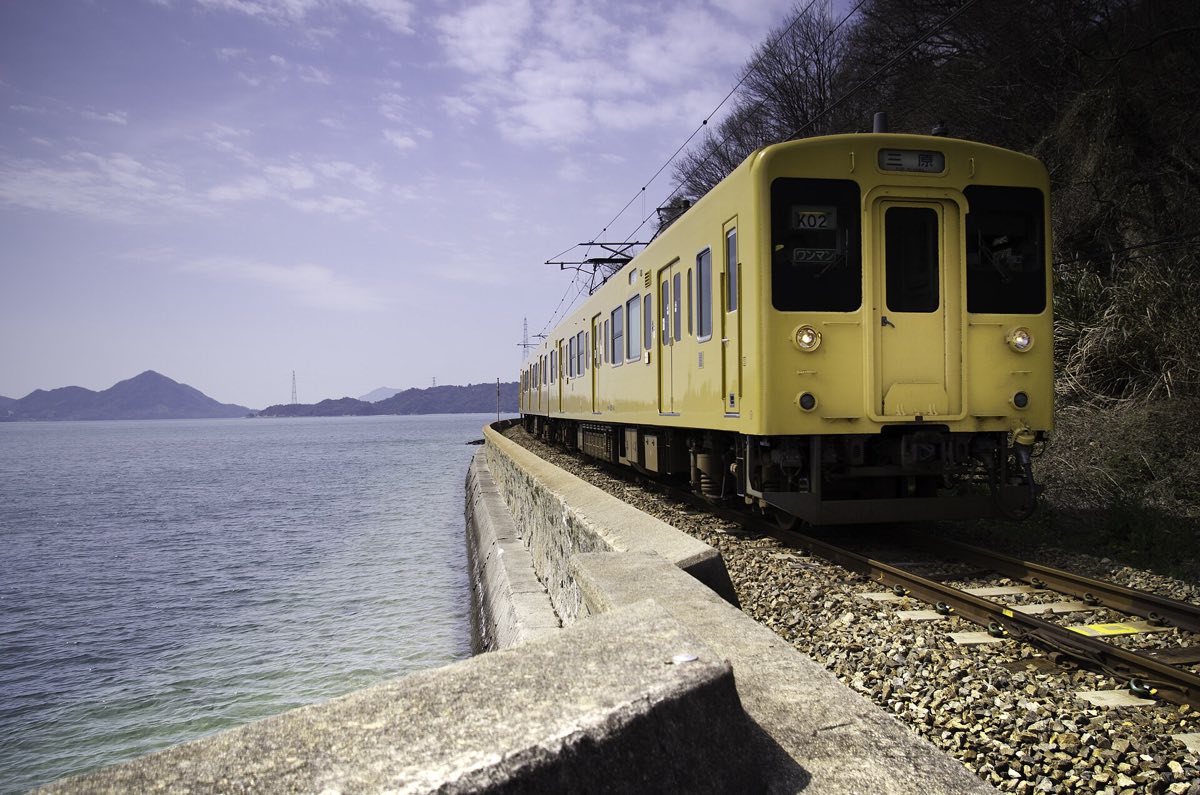
Three days in Hiroshima,
and one real choice.
Days one and two are settled: the Peace Park, then Miyajima timed to the tide. The third day is the only genuine decision, and the right answer moves with the calendar — oysters are a winter dish, the Carp play at home in fixture blocks, and the island night is the upgrade almost everyone should take.
Take the island night. Move Miyajima to the afternoon of day two, sleep on the island, and let day three start with an empty Omotesando and end with a day trip on the way out. A Miyajima room runs roughly twice a city business hotel, which puts it near ¥19,000 against ¥9,500, and there are very few rooms — book early. Two exceptions: if you are here between October and March the oyster case for a Kure or Onomichi day is real, and if the Carp have a home fixture on your dates that is a genuine reason to stay in the city.
Days one and two are not the decision
The premiseNothing changes about the first two days: the Peace Park from the 7:30 museum opening, then Miyajima with the ferry timed to the tide rather than the clock. Both are laid out stop by stop on the two-day itinerary, and a third day does not improve either of them.
Hiroshima is a comfortable, well-run, entirely ordinary mid-size Japanese city. The bomb took the old fabric and the rebuild was practical rather than picturesque. Come for the Peace Park, the island and the food — not for the streetscapes. The mistake almost everyone makes is giving the important part four hours and the ordinary part none.
What the third day buys is the part of Hiroshima that the four-hour visitor never sees at all — the island after the last ferry has gone, or a working port city an hour down the line, or a sake town, or a baseball crowd that is genuinely one of the best atmospheres in Japan. None of those are important in the way the Peace Park is important. They are the reason the city is a place rather than a stop.
Miyajima runs on the tide, not the clock. Above 250cm the Great Torii appears to float and the shrine's corridors stand over water; below 100cm you can walk out across the sand to the gate's legs. Those are the Miyajima Tourist Association's own published thresholds, and they are measured against the Hiroshima Port datum — 200cm below mean sea level — so a generic tide app will give you numbers that look similar and are not comparable. Check the official table before you book the ferry, not after.
Three ways to spend it, ranked
The third dayOne night on Miyajima
The island's distinctive asset is not the shrine, which you can see on a day trip. It is the six hours either side of the last ferry — the torii floodlit, the deer in empty streets, Omotesando shut and the queues gone. Expect roughly ¥19,000 for a ryokan bed with two meals against ¥9,500 for a city business hotel, and expect it to be sold out if you leave it late; the island has very few rooms. Full verdict →
One day trip out of the city
Kure and the Yamato Museum, Onomichi and the Shimanami Kaido, Iwakuni's Kintai Bridge, Okunoshima's rabbits, Saijo's sake streets. All are real days out and all are better in oyster season, when the grilled-oyster stalls and the winter festivals are running. Journey times are on each page — the day-trip verdicts are ranked here. Full verdict →
A slow third day in the city
Mazda Museum (free, but reservation-only, 90–120 minutes, English tours in the afternoon and booking opens three months out), Mitaki Temple, the Museum of Art, and a Carp game at Mazda Zoom-Zoom Stadium. The baseball is the one that justifies the day on its own; the rest is a rainy-day fallback rather than a plan. Full verdict →
Day three, if you took the island night
The recommended versionMiyajima before the first ferry lands
The 09:00 crowd is still on the mainland. Omotesando is empty, the deer are on the front, and the shrine's exterior and the torii are free to look at from the shore at any hour. This is the hour the overnight actually buys. The island, decided.
Daishoin, or the Momijidani descent
Daishoin is free, five minutes uphill from the shrine, and the most consistently underrated 45 minutes on the island. If you climbed Misen yesterday, Momijidani at this hour is close to silent.
Itsukushima Shrine, if you have not been in
¥300 adult, ¥200 high school, ¥100 elementary and junior high, or ¥500 combined with the Treasure Hall. Opens before the first big ferry arrivals reach it. The shrine page.
Anago-meshi at Miyajimaguchi
Conger eel over rice is the dish of the crossing rather than of the island, and Ueno by the ferry terminal is the famous shop. Restaurant prices are not verified on this site. What it is.
One day trip, on the way back
You are already on the JR Sanyo line with your bag. Iwakuni is the other direction and short; Kure and Okunoshima are the other way. Rail journey times are not verified on this site — check JR West before you commit a connection.
Back in the city — oysters, or the Carp
October to March, this is when the oyster case is unanswerable: grilled stalls, winter festivals, and the peak from December to February. Outside that window you get farmed summer Kaki Komachi and a lot of places simply not doing oysters. The season, explained.
The Dome, floodlit, one more time
Line 2 or 6 to Genbaku Dome-mae, ¥240, about 15 minutes from the station. Free, unfenced, and different from how it looked on day one — which is most of the argument for three days rather than one.
Every third-day option, with the honest caveat
CompareRail journey times below are approximate and are NOT on our verified list — JR West's own timetable is the authority. Admissions and ferry fares are verified as of 4 August 2026.
| Third day | Rough time out | Cost | Best season | Verdict |
|---|---|---|---|---|
| One night on Miyajima | None — you are already there | ~¥19,000 a room with two meals (indicative) | Any; autumn colour peaks in Momijidani | WORTH IT |
| Kure and the Yamato Museum | ~35 min by JR Kure line (unverified) | Admission not verified — the museum's renovation status is also unconfirmed | Oct–Mar for the oysters on the way back | DEPENDS |
| Onomichi | ~1h15 via shinkansen and local (unverified) | Senkoji ropeway ¥500 one way / ¥700 return — closed 7–25 December 2026, though the 30-minute walk up and the 24-hour summit deck are not | Spring and autumn; the Shimanami Kaido is a cycling day of its own | DEPENDS |
| Iwakuni and the Kintai Bridge | ~50 min by JR (unverified) | 🔴 Bridge ¥310 → ¥500 from 1 September 2026 (child ¥150 → ¥250); set ticket with ropeway and castle ¥1,550 / ¥700. Ticket office 8:00–17:00, but the bridge is crossable 24 hours with an honesty box at night | Cherry blossom and autumn | DEPENDS |
| Okunoshima (Rabbit Island) | ~1h30 plus a ferry (unverified) | Ferry fare not verified | Any — but it is a long day for rabbits | DEPENDS |
| Saijo sake town | ~40 min, under ¥700 — to Saijo station on the JR Sanyo Main Line, ⚠ not the shinkansen station called Higashi-Hiroshima | Kamotsuru is the reliable anchor: free entry, 10:00–18:00, ¥500 cash-only three-sake tasting. Kamoizumi's Syusenkan opens weekends and public holidays only | Sake Matsuri is confirmed for 10–11 October 2026 | WORTH IT |
| A Carp home game | ~10 min walk from Hiroshima Station | Ticket prices not verified — the club publishes the fixture list | Late March to October only | WORTH IT |
| Mazda Museum | ~20 min by JR and shuttle | Free — but reservation-only, no walk-ups, 90–120 min | Any; English tours are in the afternoon | DEPENDS |
| Tomonoura | ~1h40 (unverified) | Ferry and museum fees not verified | Any, but it is the longest run on this list | SKIP |
Book the Mazda Museum a month ahead at the absolute minimum — the tour takes reservations up to three months out and takes no walk-ups at all. Dollar prices convert at ¥157.7 = $1, the rate on 4 August 2026. Treat every $ figure as a snapshot and the ¥ figure as the real price.
The third day, month by month
When to take itOysters, baseball and the island's colour all move with the calendar, and they do not move together.
Oysters run roughly October to March, peaking December to February. Summer visitors get the farmed Kaki Komachi variety and many restaurants simply not doing oysters at all. The Carp season runs late March to October — the club publishes the fixture list, and we have not verified ticket prices. Two corrections worth making. The Hiroshima Flower Festival is in May, during Golden Week, not August. And 🔴 the Miyajima Oyster Festival was cancelled in February 2026 — the organisers could not secure enough oysters after poor growth, and 2027 is unconfirmed, though nearly every travel site still lists it as an annual fixture. Saijo's Sake Matsuri, by contrast, is confirmed for 10–11 October 2026. One more thing summer visitors get told wrongly: summer oysters do exist, as triploid natsu-kaki that do not spawn — the peak is still December to February.
If your third day is 6 August, it is not a third day
The August problemOn 6 August the Peace Memorial Park is a ceremony, not a sightseeing destination — 55,000 people attended the 80th anniversary. Hotels sell out months ahead and Nozomi seats for 5–7 August go within days of release. If your dates land on it, decide deliberately: come for the ceremony and the evening lanterns and accept that everything else is full, or move your Hiroshima day.
The practical consequences for a three-day plan: the park is closed to the public from 05:00 to 09:00, the ceremony runs 08:00–08:50 at the Cenotaph, and the museum does not open until about 09:45 that day despite its advertised August hours. From 8 to 16 August the museum is online-reservation-only all day, 1,000 people an hour, released 90 days ahead. Miyajima and every day trip on the list above are unaffected — so if your dates straddle the anniversary, put the island or Kure on the 6th and the park on the 4th or the 17th.
The compensating fact is that 5–6 August is the only time you can hear actual survivor testimony in English without booking, at the Hiroshima International Conference Center inside the park. That is the rarest thing available in the city. The full hour-by-hour.
Three days in Hiroshima — the questions people ask
FAQPage schema pairedIs 3 days in Hiroshima too many?
No, but the third day has to be chosen rather than drifted into. Two days covers the Peace Park and Miyajima. The third only earns its place if it is an island night, a day trip of 3 to 5 hours each way, or a Carp home fixture between late March and October — otherwise you are spending a day in a comfortable, ordinary mid-size city.
What should I do on my third day in Hiroshima?
Sleep on Miyajima on night two and take day three slowly, adding a day trip on the way back to the mainland. Failing that, take Kure or Saijo between October and March, when the oyster season is running — Saijo is about 40 minutes and under ¥700 away, to Saijo station on the JR Sanyo Main Line rather than the shinkansen station called Higashi-Hiroshima. The full ranking is on our best second day page.
Is one night on Miyajima worth it?
Yes, if you have three days. A ryokan bed with two meals runs roughly ¥19,000 against about ¥9,500 for a city business hotel, and what the extra buys is the two hours before the first ferry and the four hours after the last one. On a two-day trip the maths does not work and you should day-trip it instead.
When is oyster season in Hiroshima?
Roughly October to March, peaking December to February. That is when the grilled-oyster stalls run — though note the Miyajima Oyster Festival was cancelled in February 2026 after poor oyster growth, and 2027 is unconfirmed. Between June and September you will find the farmed Kaki Komachi variety and a lot of restaurants not serving oysters at all, which is worth knowing before you plan a third day around them.
Can you see a Carp game in Hiroshima?
Yes, when the NPB season is running from late March to October. Mazda Zoom-Zoom Stadium is about a 10-minute walk from Hiroshima Station, which makes it the easiest evening in the city. We have not verified ticket prices or availability — the club publishes its own fixture list and that is the thing to check first.
How much does 3 days in Hiroshima cost?
Around ¥6,300 (~$40) per adult in admissions and local transport across three days, plus beds. Two city nights at roughly ¥9,500 and one Miyajima night at roughly ¥19,000 puts accommodation near ¥38,000 for a couple's room. Hiroshima Prefecture adds a ¥200 per person per night prefectural accommodation tax you pay at the desk, which is unusual for a Japanese city this size.
Should I add Nagasaki instead of a third day in Hiroshima?
Only if you have four days. Nagasaki is about 2.5 hours away by shinkansen and is a separate trip rather than a day trip, and its own ceremony falls on 9 August, three days after Hiroshima's. The comparison is on Hiroshima or Nagasaki.
Is the Mazda Museum worth a half day?
It is free and it is 90–120 minutes, which makes it good value on time. The catch is that it is reservation-only with no walk-ups, morning tours are in Japanese and afternoon tours in English, and booking opens three months ahead with a month's notice being the realistic minimum. Decide before you arrive, not on the day.
The third day, booked
Book itThe island room is the one thing on this page that genuinely sells out. Everything else can be decided on the morning.