Peace Park done.
Miyajima done.
Now take the train to Kure.
This is the day most itineraries give up on. Almost every guide fills it with a second walk round the Peace Park, which is the one thing you have already done. Here are fifteen better answers, ranked, with journey times and what each one actually costs.
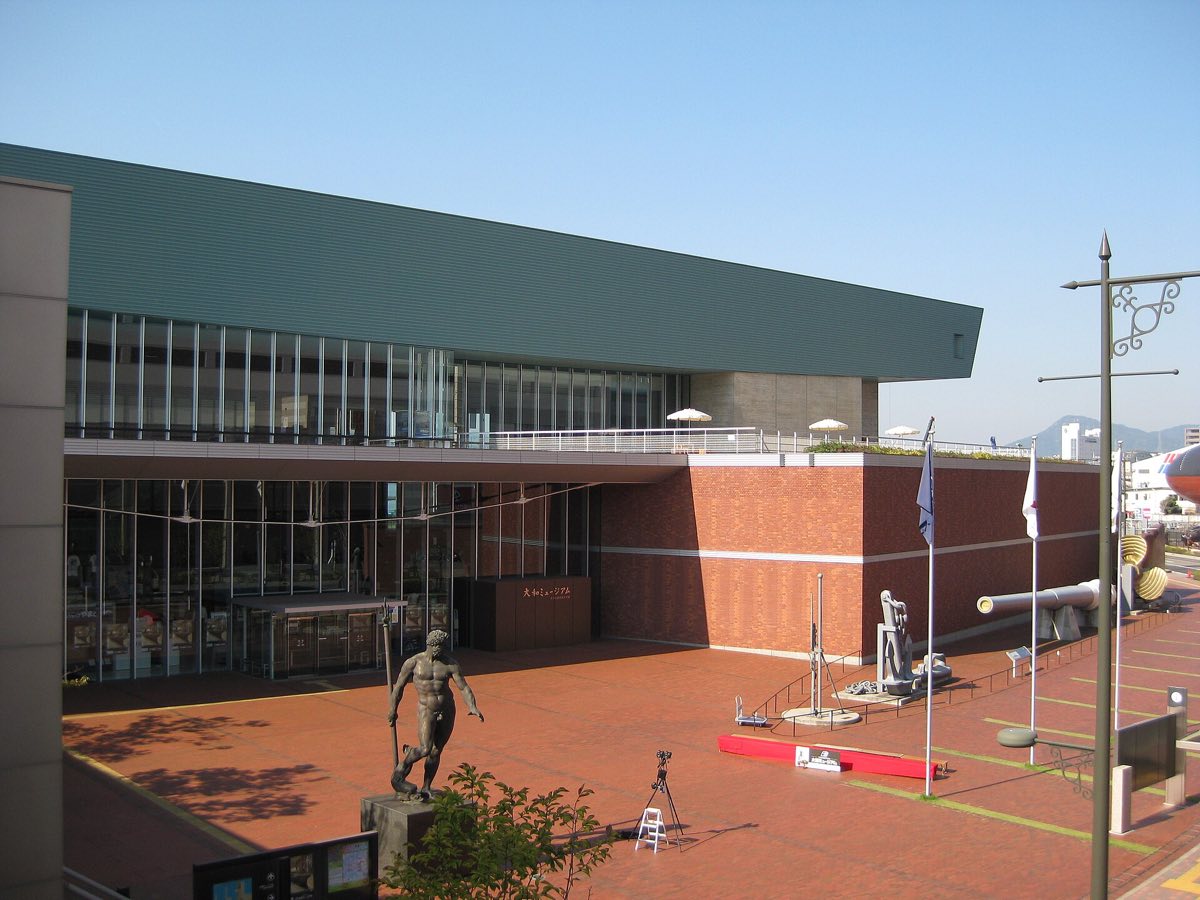
Take Kure. It is about 40 minutes on the JR Kure line, the Yamato Museum and the JMSDF submarine museum opposite fill 3–4 hours, both are indoors, and the whole thing is 5–7 hours door to door. If you want to stay in the city instead, the honest ranking is Shukkeien at ¥350, the castle grounds free, and — if you want to go deeper into the history rather than repeat it — the free daily 13:00 English survivor-testimony talk and the annex that opened on 1 May 2026. Do not walk the Peace Park twice.
Why the second day goes wrong
Answer firstBecause the first day used up the two things everybody knows about, and no page on the first results screen has a ranked answer for what follows.
The standard advice for day two is a slower loop of the Peace Memorial Park and its monuments. If you did the park properly on day one — the museum, the Cenotaph, the Dome, the Children's Peace Monument — a second circuit adds very little. What does add something is going deeper rather than again: hearing testimony, or seeing the buildings the bombing left standing outside the park boundary. Both of those are free and neither is a repeat.
But the strongest single recommendation on this page is to leave the city. Kure is about 40 minutes away on the JR Kure line, its two museums are two minutes apart and entirely indoors, and it does not appear in any English listicle for Hiroshima. It is the answer we would give nine times out of ten. Hiroshima is a comfortable, well-run, entirely ordinary mid-size Japanese city. The bomb took the old fabric and the rebuild was practical rather than picturesque. Come for the Peace Park, the island and the food — not for the streetscapes. The mistake almost everyone makes is giving the important part four hours and the ordinary part none.
The alternative shape, if you would rather not spend the day on trains: the city has a garden at ¥350, castle grounds that are free, an art museum at ¥510, a car factory tour that costs nothing but must be booked weeks ahead, and — from April to October — a baseball crowd that is one of the best in Japan. All of it is reachable on a flat ¥240 tram fare, and the ¥700 day pass pays from your third ride. Hiroden went to a flat ¥240 adult / ¥120 child fare on 1 February 2025, its first revision in seven years, replacing the old distance-based ¥140–270 scale. The all-day streetcar pass is ¥700, so it pays from your third ride — which is exactly what a Peace Park, castle and station day comes to.
One thing to get right before you plan around a hotel: Hiroshima Prefecture introduced a ¥200 per person per night accommodation tax on 1 April 2026, on rooms of ¥6,000 or more per person before tax and meals. It applies across the prefecture — the city, Miyajima, Onomichi — and it is not included in prepaid booking totals, so you will be asked for it at check-in. There is no separate Hiroshima city lodging tax.
Fifteen ways to spend your second day
RankedKure — the Yamato Museum and the Iron Whale
The recommended call, and by some distance. Two serious naval museums two minutes apart — a hall built around a large-scale model of the battleship Yamato, and a decommissioned submarine mounted on land that you walk through. Admissions are unverified and each museum has a weekday closing day, so check before you go. Both are indoors, which makes this the day to hold back for weather.
Onomichi — if you have a full day and clear skies
A hillside port town of stone stairs, small temples and famous cats. Ride the Senkoji ropeway up for ¥500 one way and walk down through the Temple Walk over two to three hours. The journey is the constraint — six hours on the ground or do not bother. The ropeway is shut 7–25 December 2026; the 30-minute walk up still works.
Iwakuni — the best half day, and it gets dearer on 1 September
Five wooden arches over the Nishiki River with a castle and ropeway above. The adult crossing is ¥310 until 31 August 2026 and ¥500 after it, with the bridge-ropeway-castle set ticket going to ¥1,550. Allow 1.5–2 hours on site. The bridge is open 24 hours on an honesty box, so an early or late crossing is free of everyone else.
Hearing survivor testimony — free, daily, no booking
If your instinct is to go back to the park, do this instead. A free English talk runs 13:00–14:00 every day in the museum's East Building basement, 60 minutes including questions, with no reservation. It is delivered by a denshosha — a trained successor passing on one survivor's testimony — because there are now roughly 32 living survivor testifiers against 264 legacy successors. It is the deepest hour available in this city and almost nobody advertises it.
The Teishin Hospital annex — opened 1 May 2026
An A-bombed 1935 building 1,370m from the hypocentre that became one of the few working relief stations after the bombing, reopened as an official annex of the Peace Memorial Museum on 1 May 2026. Free, no reservation, about 60 exhibits, and a 20-minute film screened hourly at :10 and :40 with English subtitles. It is a 2-minute walk from the Hiroden Hakushima line at Katei-Saibansho-mae, and it is not in the park.
Shukkeien — the ¥350 hour
A compact circuit garden ten minutes from the station and the best short thing in the city centre. ¥350 adult, university ¥150, free for high school and under and for over-65s with ID since April 2025, and ¥660 combined with the Prefectural Art Museum next door — which is the buy, because the two together make a genuine half day for the price of a coffee and a beer.
Hiroshima Castle grounds — free, and the keep is shut
The keep closed permanently on 22 March 2026 after 68 years, because the 1958 concrete reconstruction failed earthquake standards — three of the ten pages ranking for this castle still tell you to climb it. The grounds, moat, bomb-scarred stone walls and Ninomaru reconstruction remain open and free, 9:00–17:30 (to 16:30 October–March). Worth 45 minutes if you are passing; not worth crossing town for.
Saijo — sake, forty minutes out
Red-brick brewery chimneys within a few hundred metres of Saijo Station, which makes this the least demanding trip on the page. Kamotsuru is the reliable anchor — free entry, 10:00–18:00, and a ¥500 cash-only three-sake tasting. The trap: the shinkansen station called Higashi-Hiroshima is not the station for the breweries. Take the JR Sanyo Main Line to Saijo.
Okunoshima — Rabbit Island, and what is under it
Several hundred feral rabbits on an island the army used to manufacture poison gas, with a museum about it. A full day, not a half, and worth doing in the order museum-then-rabbits. Ferry fares and the current feeding rules are unverified — buy pellets before you cross and photograph the return timetable at the pier.
The Mazda Museum — free, but book it weeks ago
A working assembly line and the company's own history, free of charge, with no walk-ups at all. Morning tours run in Japanese and afternoon tours in English; booking opens three months ahead and a month is the practical minimum. If you did not book before you arrived, this is not your second day — it is your next trip.
A Carp game at Mazda Stadium
One of the best crowds in Japanese baseball, in a stadium a short walk from Hiroshima Station, and the single most ordinary-city thing you can do here — which is exactly the point this site keeps making about Hiroshima. Around 3 hours, and on day two it is a better use of an afternoon than a museum you are too tired for.
Tomonoura — the quiet harbour
A working port on the Inland Sea with a stone lantern quay, a temple hall open to the sea, and almost no coach traffic. The two-leg transfer is the catch, and it is the least verified trip in this section — the temple admissions are small ones in the low hundreds of yen and we could not confirm the exact figures.
Sandankyo — but only in late autumn
A river gorge north-west of the city, free to walk, with the cost sitting entirely in the coach — normally about ¥3,740 return. Main entrance to Kurobuchi is 2.7km, about 50 minutes each way, and the ferry across the pool there is ¥500 return, closed Wednesdays and Thursdays. Late October to late November is the reason to go.
A rainy second day, spent indoors
The Prefectural Art Museum is ¥510, the Museum of Contemporary Art ¥350, and the Hiroshima Museum of Art ¥2,500 with no collection-only ticket — one price covers the special exhibition and the permanent collection. Tsuyu normally runs 6 June to 19 July, and July is the wettest month of the year at 279.8mm, so this page earns its keep more often than you would think.
A second loop of the Peace Memorial Park
We are not going to put a stamp on the Peace Memorial Park, and we are also not going to pretend a second circuit is a plan. If the park is pulling you back, the two things that genuinely go further are the free 13:00 English testimony talk and the annex that opened on 1 May 2026 — both are listed above, and both are free. If you simply want to stand at the Dome again at night, do that: it is free, always open, and better after dark.
Pick by how much of the day you actually have
ComparedHours are door-to-door from a hotel in the city centre. Prices are what you pay on arrival, not including rail fares out of the city, which we could not verify.
| You have… | Do this | Price | Why | Verdict |
|---|---|---|---|---|
| A full day, any weather | Kure | Admissions unverified | Two indoor museums, 40 minutes out, absent from every English list | WORTH IT |
| A full day and clear skies | Onomichi | Ropeway ¥500 one way | Ride up, walk down through 25 temples over 2–3 hours | WORTH IT |
| Half a day | Iwakuni | ¥310, then ¥500 from 1 Sept | One outstanding object, 1.5–2 hours on site | WORTH IT |
| Three hours in the city | Shukkeien + the Prefectural Art Museum | ¥660 combined | The best-value hour in central Hiroshima, plus a gallery next door | WORTH IT |
| One free hour, and something to say | The 13:00 testimony talk | Free | 60 minutes, English, daily, no booking. Deeper than any second walk | DEPENDS |
| A wet day | The city's museums | ¥350–¥2,500 | MOCA ¥350, Prefectural ¥510, Museum of Art ¥2,500 all-in | DEPENDS |
| An evening only | The Dome after dark, then okonomiyaki | Free + dinner | The Dome is free and always open, and better lit at night than in daylight | WORTH IT |
| A day, and children in tow | Rabbit Island | Fares unverified | The ferry and the rabbits carry the day; read the museum first | DEPENDS |
The DEPENDS on the testimony talk is not a hedge about quality — it is the only entry here that is an hour rather than a day, so it pairs with something else rather than filling the slot. Pair it with Shukkeien and lunch. Journey times in this section are indicative rail-line estimates, not timetable readings, and fares are left blank on purpose: we could not verify a single day-trip fare against JR West's published table on 4 August 2026. A page that tells you a fare is unverified is more use than a page that guesses it.
Getting out of the city on day two
Plan your visitIf you would rather have the day arranged
Booking and getting thereDay two is the day people most often book, because the obvious things are already done and the rest takes research. We do not publish tour prices, ratings or review counts because we have not verified them; open a link for live pricing.
Your second day in Hiroshima — the questions people actually ask
FAQPage schema pairedWhat should I do on my second day in Hiroshima?
Go to Kure. It is about 40 minutes on the JR Kure line, the two naval museums are two minutes apart and fill 3–4 hours, and the round trip is 5–7 hours. It is indoors, it is cheap, and it is missing from every English list for this city. If you would rather stay put, Shukkeien at ¥350 plus the Prefectural Art Museum at ¥510 — ¥660 combined — is the best short afternoon in town.
Is it worth going back to the Peace Park a second time?
Not for a second circuit of the same monuments. If you want to go further into it, two things do that and both are free: the 13:00–14:00 English survivor-testimony talk, daily, 60 minutes, no booking, and the Teishin Hospital annex that opened on 1 May 2026, 9:00–17:00 and closed Mondays. The Dome itself is free and always open, and it is better at night than in daylight.
How many days do you need in Hiroshima?
Two covers the Peace Park and Miyajima. Three is when the city and the day trips start to exist, and it is the number we would push for — see the full answer. If you only have two, do not spend one of them on a day trip: the 2-day itinerary is already full.
What is there to do in Hiroshima city itself?
Shukkeien at ¥350 — free for over-65s with ID and for high school and under — the castle grounds free (the keep closed permanently on 22 March 2026), the Prefectural Art Museum at ¥510, MOCA at ¥350, the free G7 Summit Memorial Museum in the park, and a Carp game between April and October. All of it runs on a flat ¥240 tram fare.
What if it rains on my second day?
Take Kure — both museums are entirely indoors and you can spend 3 hours without stepping outside — or stay in the city for the galleries at ¥350–¥2,500. Tsuyu, the rainy season, normally runs 6 June to 19 July, and July is the wettest month at 279.8mm, which is more than August, June or September.
Can I do the Shimanami Kaido on my second day?
Is a second night on Miyajima better than a day trip?
If you have three days, yes — and it is the most consistently right upgrade in this region. The island's whole commercial and religious apparatus shuts between 16:00 and 18:00, so a day-tripper only ever sees Miyajima at its busiest. The overnight case is set out here. Add ¥200 per person per night for the prefectural accommodation tax.
What should I eat on day two?
If you had okonomiyaki on day one, take the city's other two signature noodle dishes: Hiroshima tsukemen, which is cold noodles in a cold, thin, spicy-sour sauce and the opposite of tsukemen elsewhere, at ¥900–1,300, and shiru-nashi tantanmen. Start two spice levels lower than you think — the scales are not standardised between shops. If it is between December and February, take oysters instead.
Everything you could do instead
Keep goinga second night.
Book it in the city.
The whole argument of this page is that Hiroshima repays a third day, and a third day needs a second night. The city has some of the best-value beds on the Sanyo line and no city lodging tax — but since 1 April 2026 the prefecture charges ¥200 per person per night on rooms of ¥6,000 and over, and it is not included in prepaid booking totals, so you will be asked for it at the desk. If your dates touch 5–7 August, book months ahead: the city sells out.
Compare Hiroshima hotels